Art of Remembrance brings together contemporary artworks created through immersive residencies at World War II remembrance sites across Europe. Developed in direct dialogue with archives, landscapes, historians, and local communities, the works presented here explore memory as a living, fragile process. This online exhibition offers an introduction to the project, the artists and their creative journeys, and the artworks that reinterpret WWII history through contemporary artistic practice.
Art of Remembrance brings together contemporary artworks created through residencies at World War II remembrance sites across Europe. The artists were invited to spend time in places shaped by the war, working with archives, landscapes, historians, and local communities to create new works grounded in direct encounter rather than distant interpretation.
The exhibition approaches memory as something fragile and ongoing, shaped not only by monuments and official narratives, but also by material traces, everyday gestures, and forms of care and survival that persist across generations. Trees marked by explosions, underground structures reclaimed by nature, diaries, songs, domestic objects, and bodily presence form a shared vocabulary through which the past is revisited and re-experienced.
Across the exhibition, artists explore forms of remembrance that often remain invisible: the work carried out within families, women’s roles in resistance and survival, non-human witnesses such as animals and landscapes, and the slow ways in which trauma is absorbed by places and bodies. Rather than heroic representation, the works privilege intimacy, attentiveness, and embodied experience.
Faced with histories of extreme violence, the artists avoid direct depiction of atrocity. Instead, they employ suggestion, metaphor, and material presence, opening a space for personal engagement.
Art of Remembrance does not offer a single narrative of the past but proposes contemporary art as a space where multiple memories can coexist, where they are held open, questioned, and kept alive in the present.
Rebekka Bauer is a German visual artist whose work spans photography, installation, text, performance, and artist publications. She lives and works in Munich and Leipzig. Her practice is rooted in an exploration of memory culture, with a strong focus on personal and intergenerational history. Often working with archival materials, found objects, and autobiographical references, Bauer examines how intimate experiences intersect with broader historical forces – especially those related to the legacy of the Second World War.
Bauer studied stage design and fine art in Salzburg, Vienna, and Leipzig, and her works have been presented in numerous exhibitions and festivals in Germany, Austria, and other parts of Europe. She has also published multiple artist books and contributions in collaborative publications. Her projects often delve into the affective textures of family memory, with attention to gender, care, and the domestic sphere, translating complex emotional narratives into tactile and spatial forms.
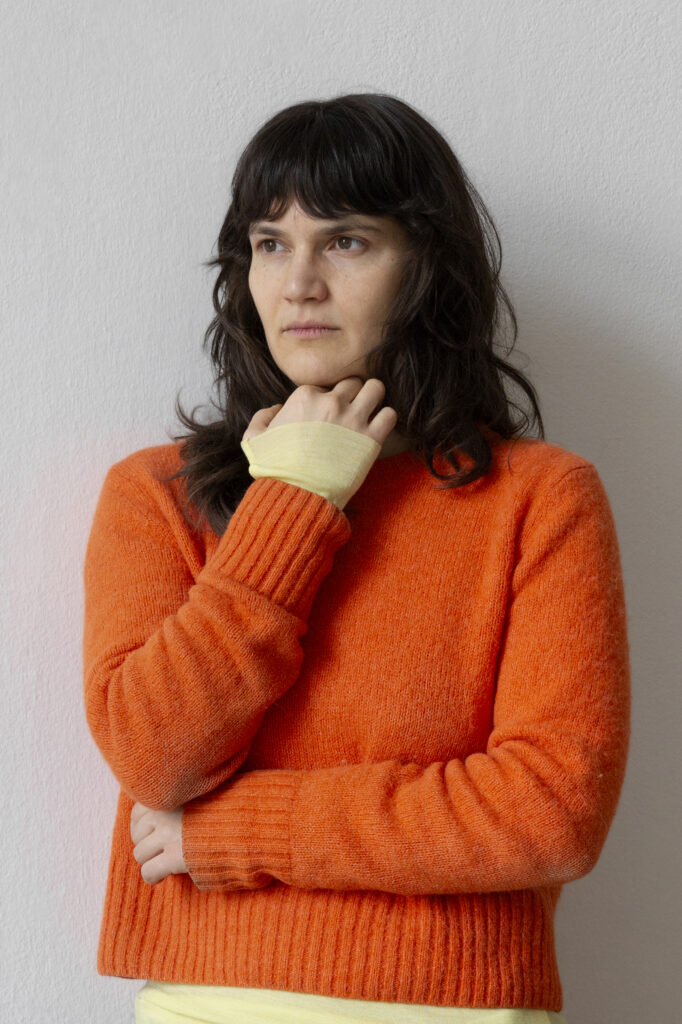
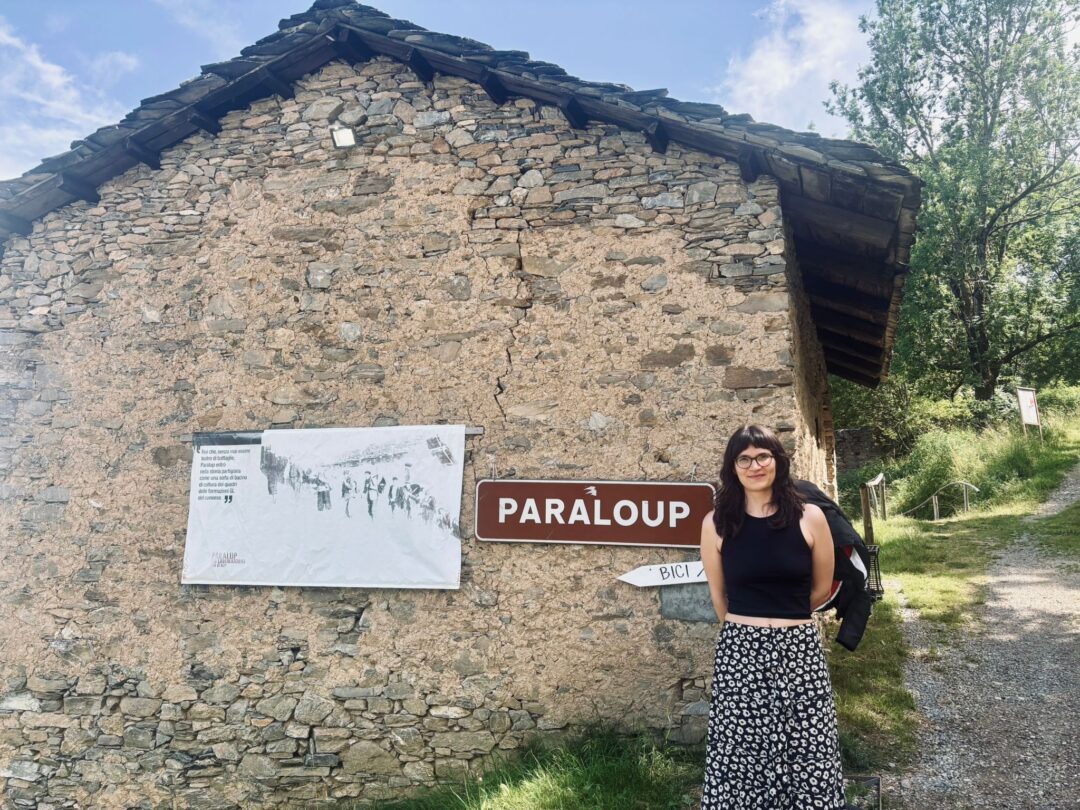
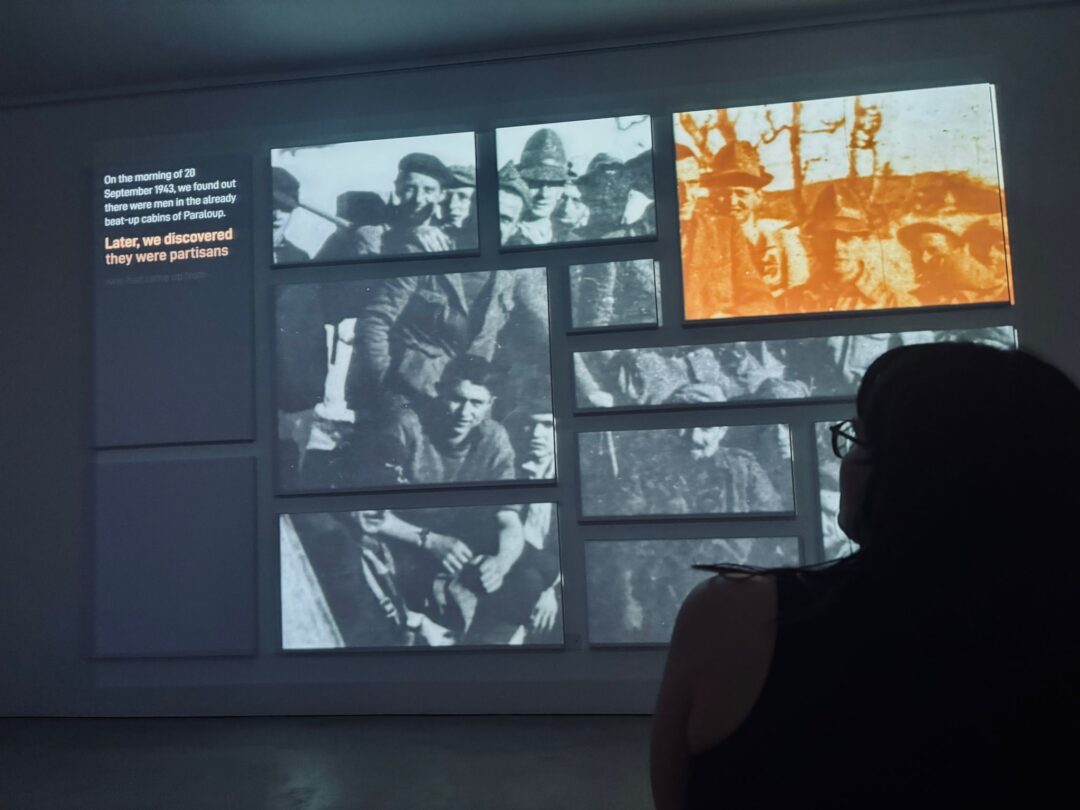
Rebekka Bauer’s residency in Paraloup was shaped by a sustained engagement with the mountain landscape, local antifascist memory work, and the biographies of women involved in the Italian Resistance. The remoteness of the site fostered both solitude and interdependence, a condition Bauer identifies as central to understanding partisan life in the mountains, where autonomy and collective reliance coexisted. Time spent living and working in Paraloup allowed her to experience this tension directly, informing a practice attentive to rhythm, repetition, and everyday gestures.
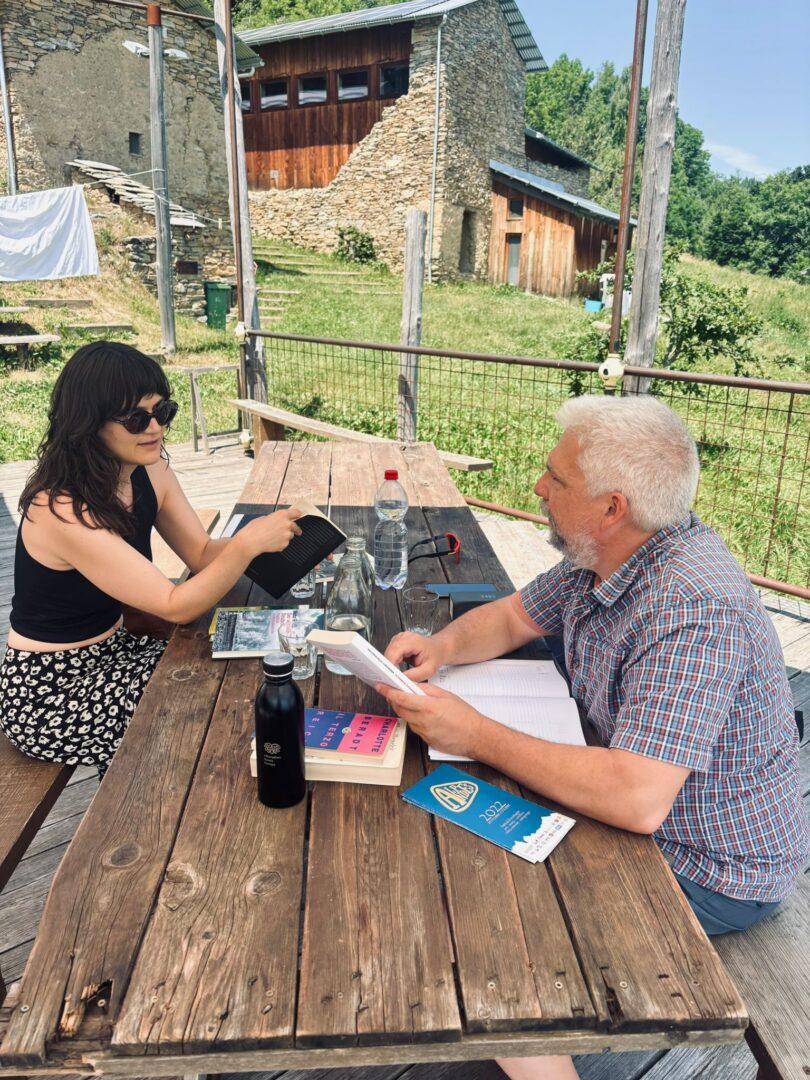
Encounters with historians, families of former partisans, and members of the cooperative active in Paraloup played a central role in her process. Rather than approaching the site as a fixed historical location, Bauer treated it as a living environment shaped by continuous acts of care, maintenance, and transmission. These contemporary practices of collective life became inseparable from her historical research, reinforcing her interest in forms of resistance that unfold outside heroic narratives.
Central to Bauer’s research was the figure of Lidia Beccaria Rolfi, partisan, deportee to Ravensbrück, and later a public witness. Through diaries, drawings, correspondence, and family photographs, Bauer examined how remembrance extends far beyond the wartime period, sustained through decades of testimony, education, and emotional labour. Particular attention was given to Rolfi’s writings produced during her imprisonment, where learning, imagination, and attention to everyday life functioned as strategies of survival. For Bauer, these practices reveal resistance not only as an act of opposition, but as a long-term commitment to care, responsibility, and relational endurance.
Throughout the residency, Bauer combined archival research with walking, observation, and material collection. Allowing distance and reflection to shape the final form of the work, she approached artistic production as a slow process in which historical material, personal encounter, and contemporary ecological concerns gradually converged.
Raphaël Dallaporta is a French artist and photographer known for his rigorous, research-driven approach to contemporary visual art. Drawing on archaeology, history, and science, he collaborates closely with researchers to develop visual protocols that transform hidden or forgotten objects and territories into stilllifes and landscapes.
He studied at the Ecole des Gobelins de l’image in Paris and later at Fabrica in Italy and was a resident of the Villa Medici (French Academy in Rome). Raphaël Dallaporta’s work has been widely exhibited internationally and is held in major public collections, including the Centre Pompidou, the Maison Européenne de la Photographie (Paris), Photo Elysée (Lausanne), the New York Public Library, and the Getty Center (Los Angeles).
His projects range from large-scale immersive films to time-based installations rooted in photographic investigation, and his monographic publications have received significant critical acclaim. Working across media, Dallaporta consistently challenges viewers to reconsider the relationship between technological progress and human evolution.
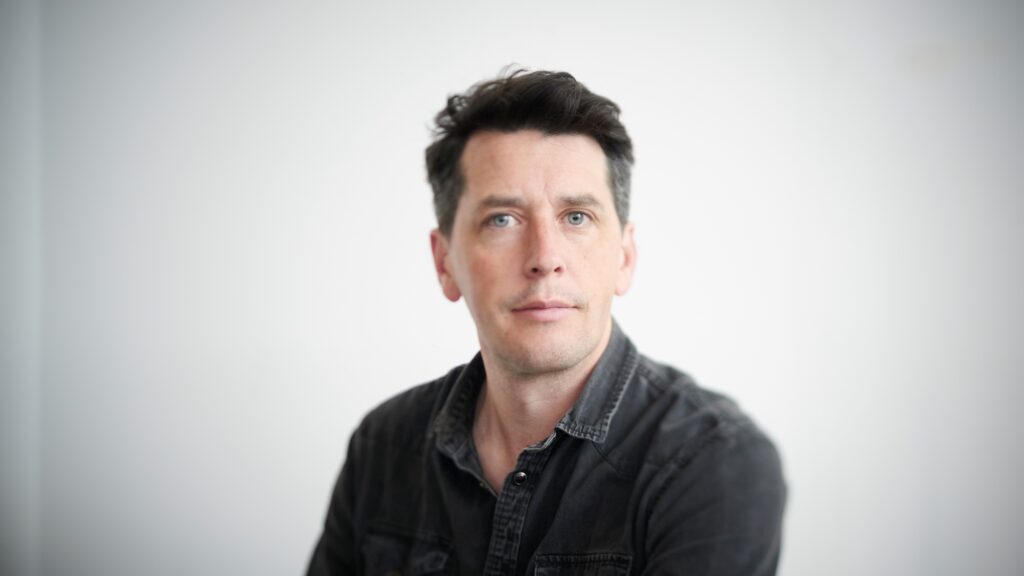
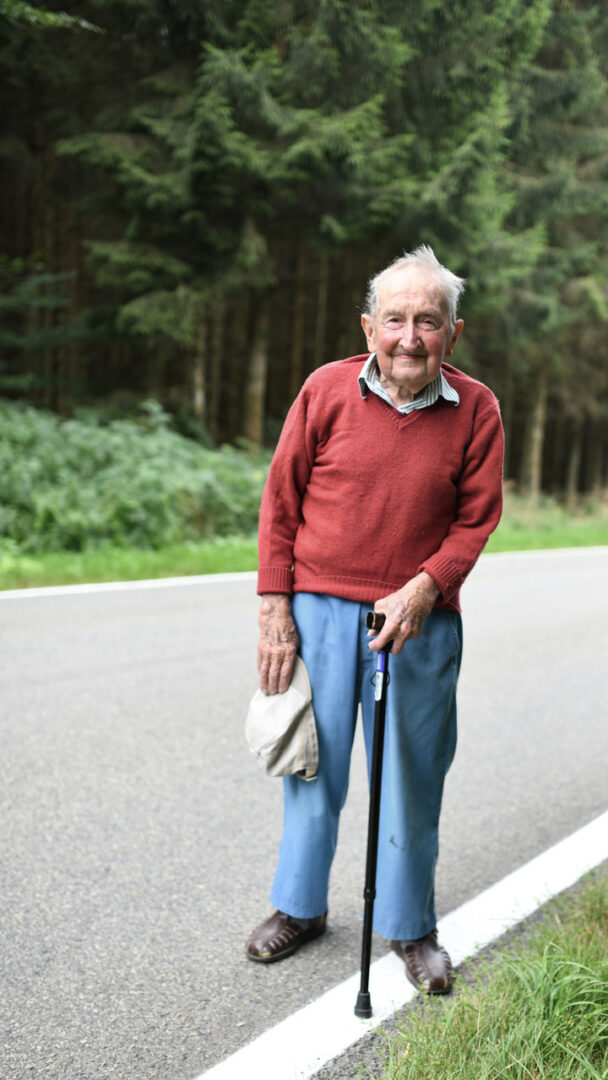
Raphaël Dallaporta approached his residency at the Bastogne War Museum as a slow, site-based investigation rooted in the landscapes of the Belgian Ardennes. His guiding question was: what remains when human witnesses have disappeared? As if naturally so, trees – along roadsides or forests on former battlefields – have asserted themselves as central figures in his research. As living, silent presences, they bear history inscribed not through narrative, but through matter.
Working outward from the Bastogne War Museum, Dallaporta explored multiple sites marked by the final phase of the Second World War. In a region where military history and heroic narratives remain strongly present, he deliberately sought to shift attention away from feats of arms toward anonymous, often overlooked forms of testimony. Close collaboration with the museum’s team and local experts allowed him to build trust, access archives, and move fluidly between historical research, fieldwork, and artistic experimentation.
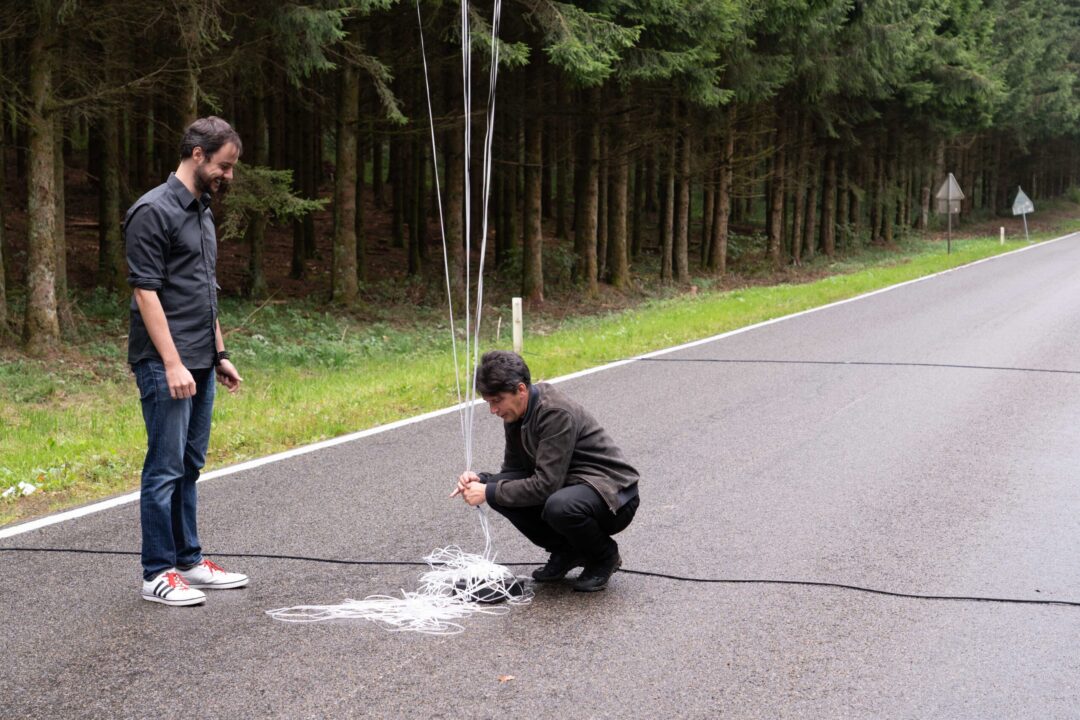
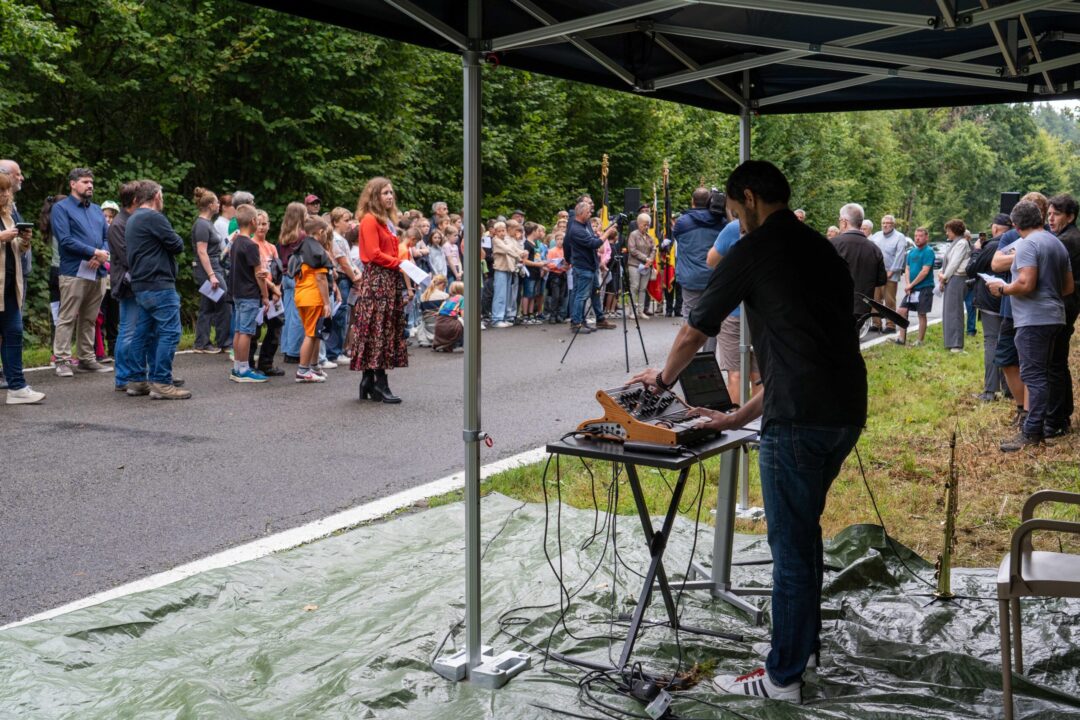
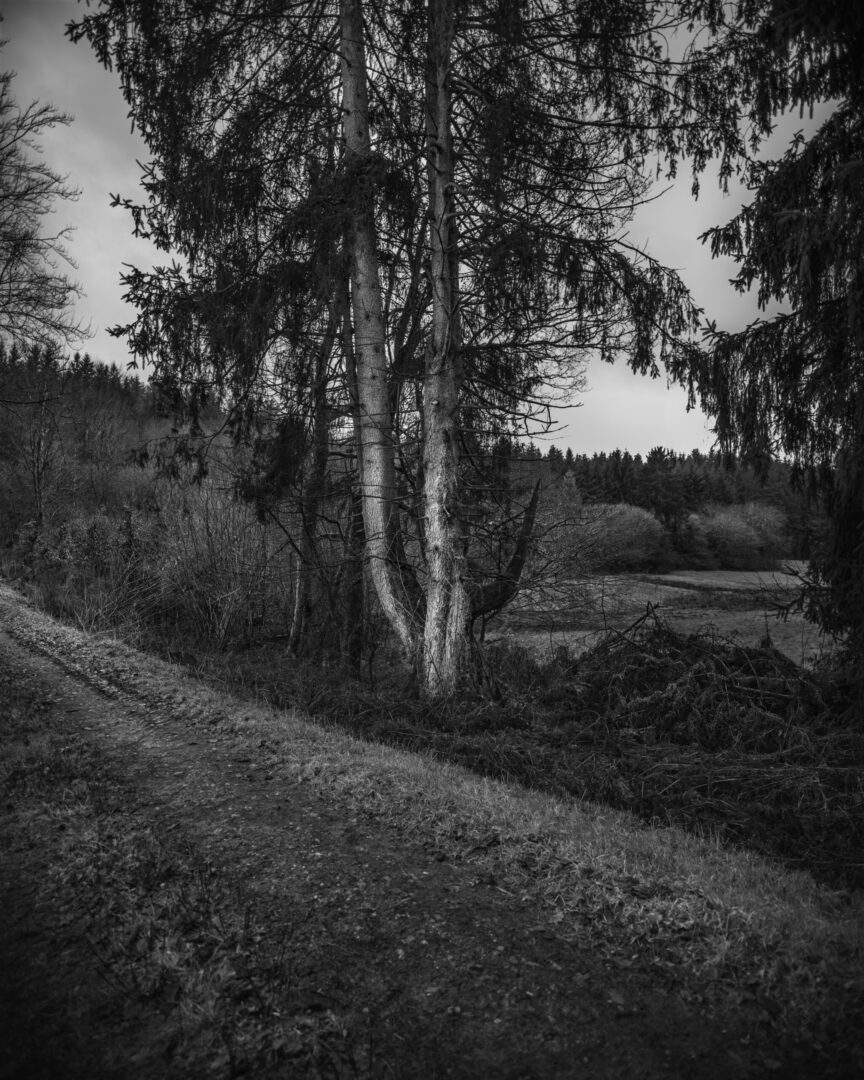
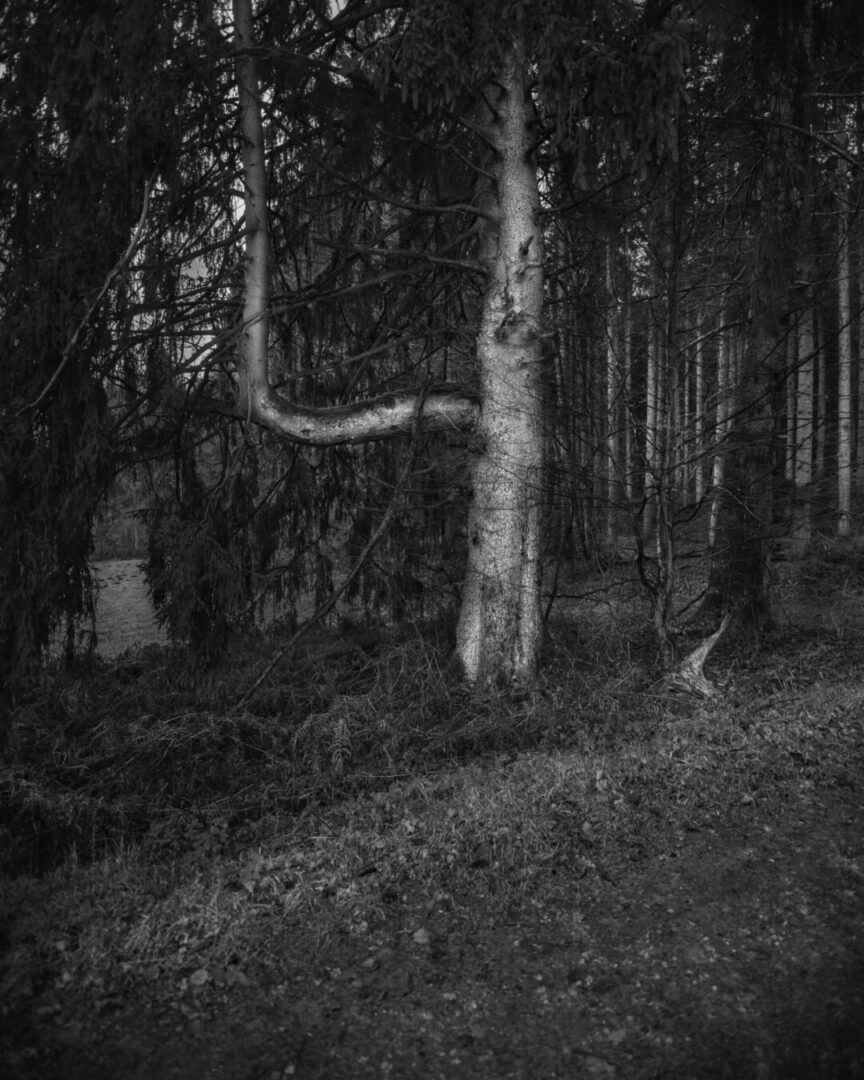
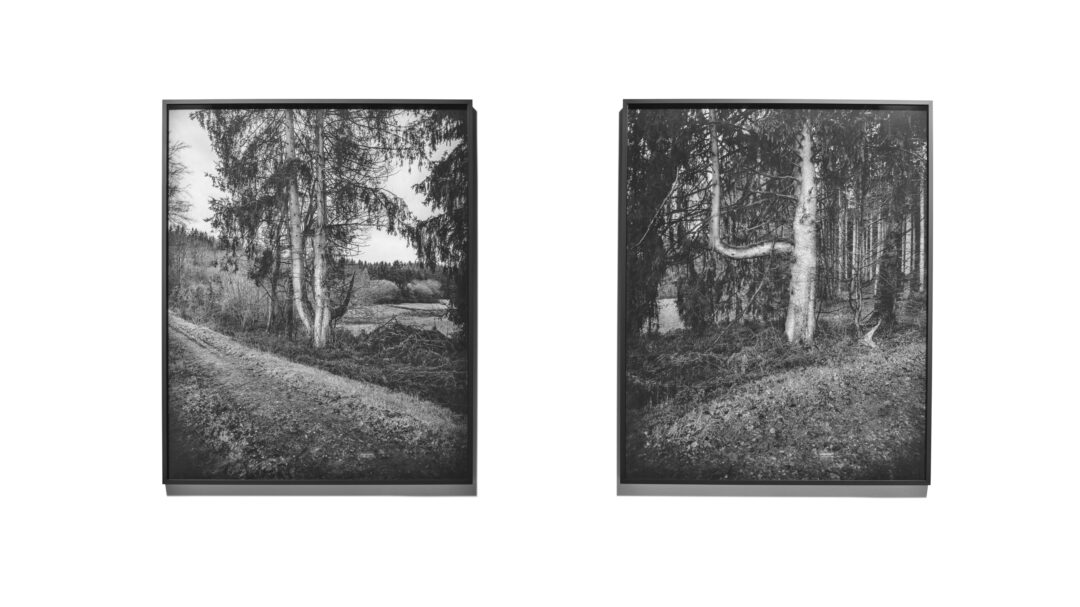
At the Bois du Beleu, Dallaporta investigated the launch, on 8 September 1944, of the first operational V2 rocket, an event that simultaneously marked the violent birth of the space age and the death of seven civilians in the Paris suburbs. On this former secret launch site, he photographed two centenarian conifers whose asymmetric growth still bears the scars of the fire caused by the rocket launch. The trees’ discreet deformations link a biological stress embedded in wood to a decisive rupture in human history: a weapon of war that would later underpin space exploration.
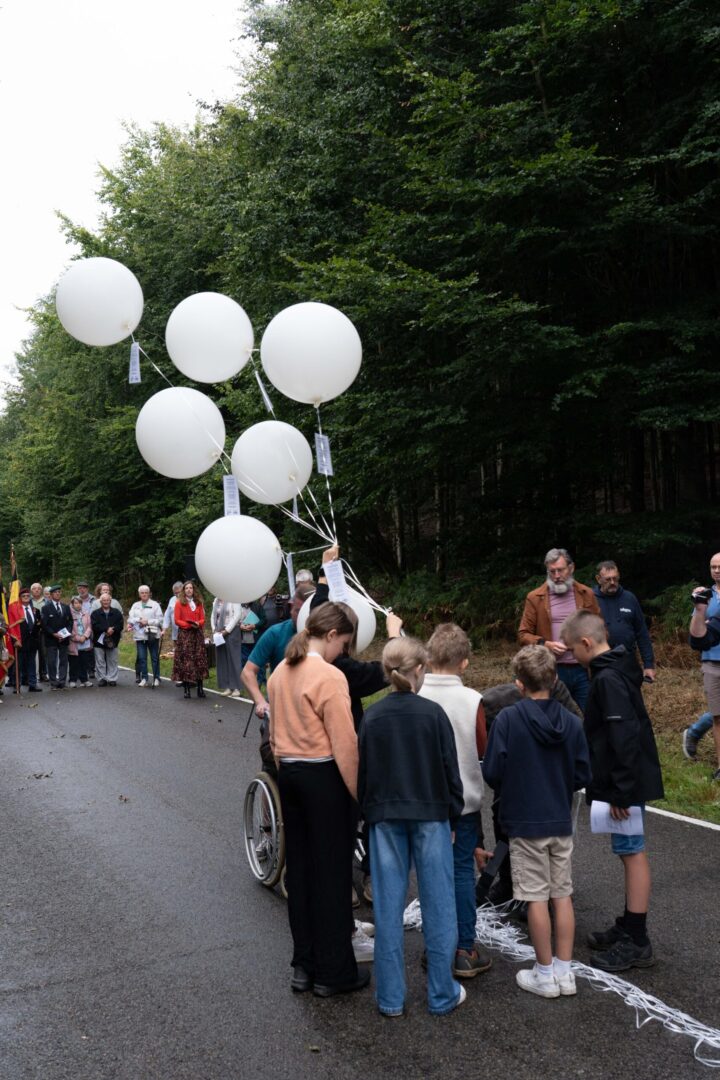
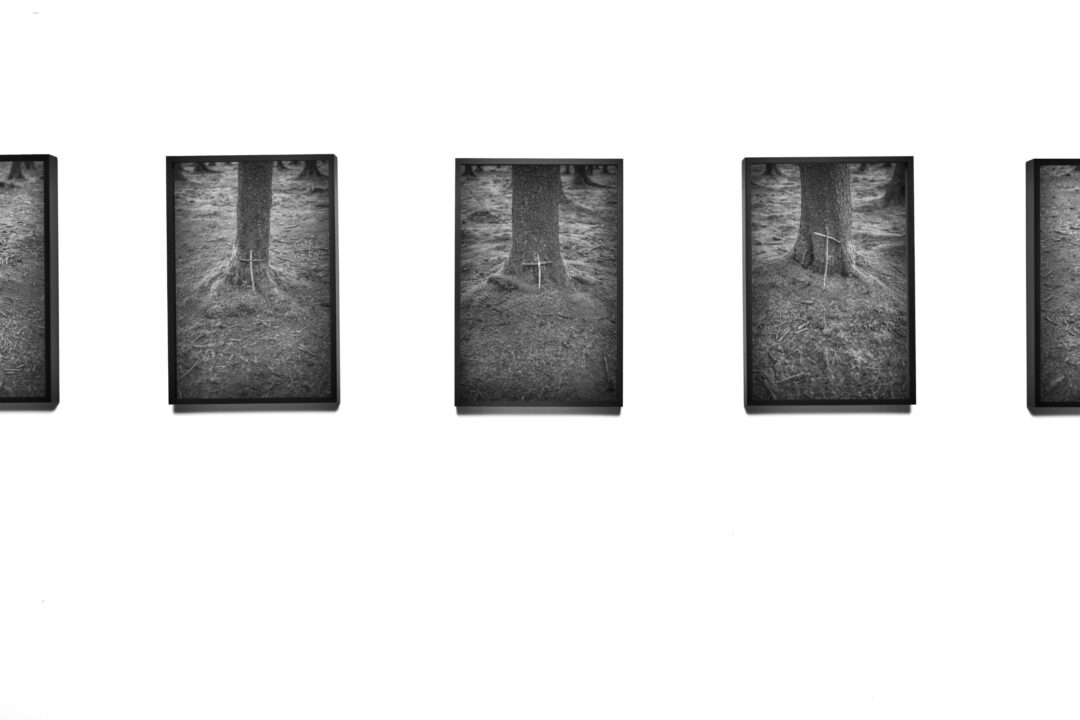
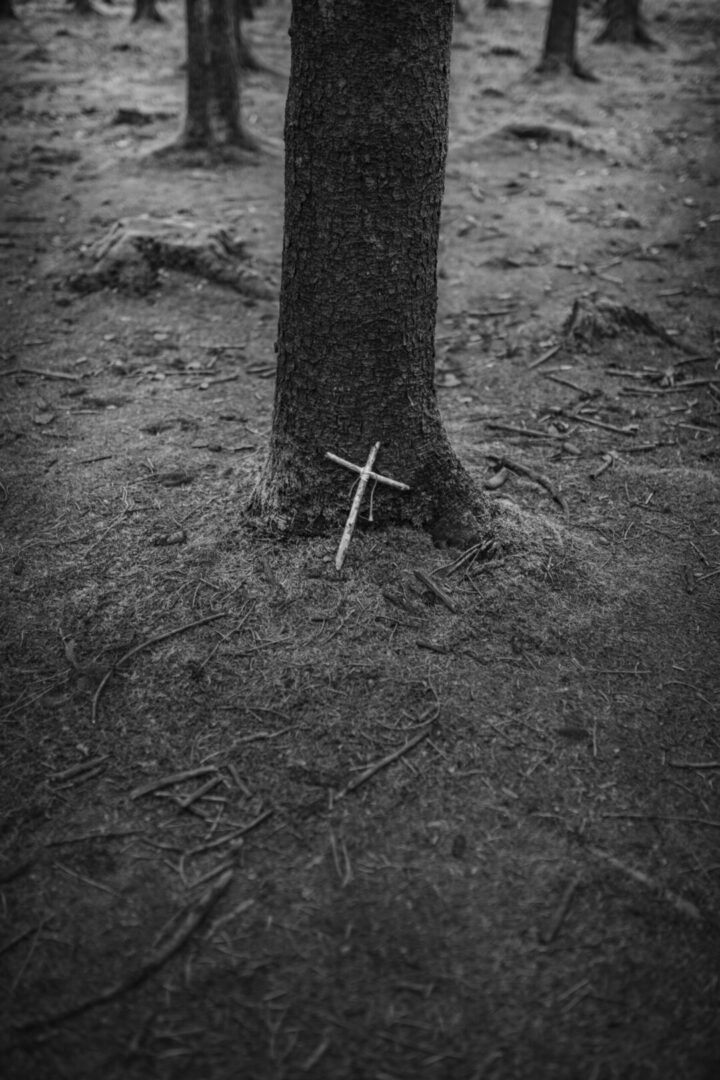
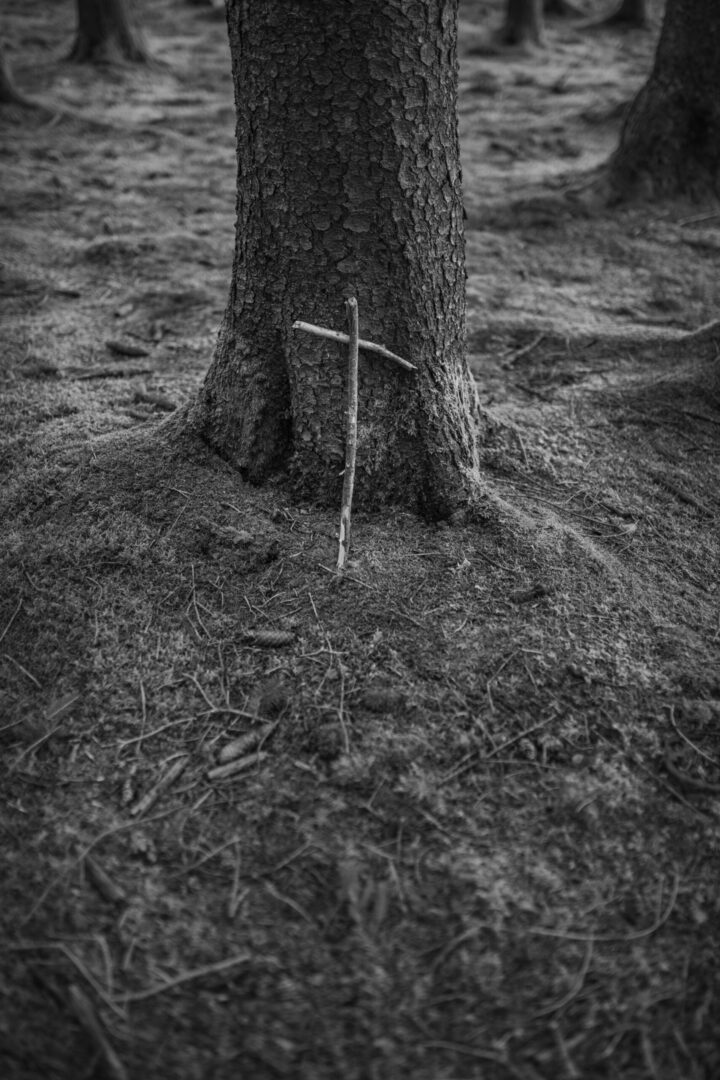
At the Bois Jacques battlefield, Dallaporta turned his attention to contemporary gestures of remembrance. Here, no trees date back to the fighting itself; all have regrown since. Instead, visitors spontaneously assemble crosses from fallen branches, inscribing their own acts of memory into the landscape. These fragile, anonymous rituals became a key focus of his work.

Archival research also played a central role. An aerial photograph taken in January 1945, showing the village of Bizory during the final phase of the Battle of the Ardennes, prompted reflection on distance, abstraction and the military gaze. Encounters with historians, forest rangers, school groups, and visitors shaped a practice attentive to dialogue, transmission, and shared presence. Throughout the residency, Dallaporta understood each gesture, photographing, collecting, cutting wood, or designing commemorative moments, as part of a broader effort to render a traumatised territory inhabitable again.
Juhana Moisander is a Finnish artist whose practice centers on immersive video installations that integrate sound, performance, and scenographic design. His work investigates the psychological dimensions of collective memory, cultural myths, and social rituals, often drawing on references from art history, religion, and folklore. Moisander creates carefully composed, atmospheric environments where viewers are invited to reflect on the emotional and symbolic undercurrents of shared human experience.
He holds degrees in fine arts and media studies from institutions in Finland and has exhibited extensively in Finnish museums and international venues. His works have been featured in solo exhibitions at EMMA – Espoo Museum of Modern Art, Mikkeli Art Museum, Gallery Hippolyte, and others, and are held in several public collections. Moisander’s approach blends choreographed movement and audiovisual elements into multi-layered compositions that explore the tensions between past and present, power and vulnerability, individual and group.
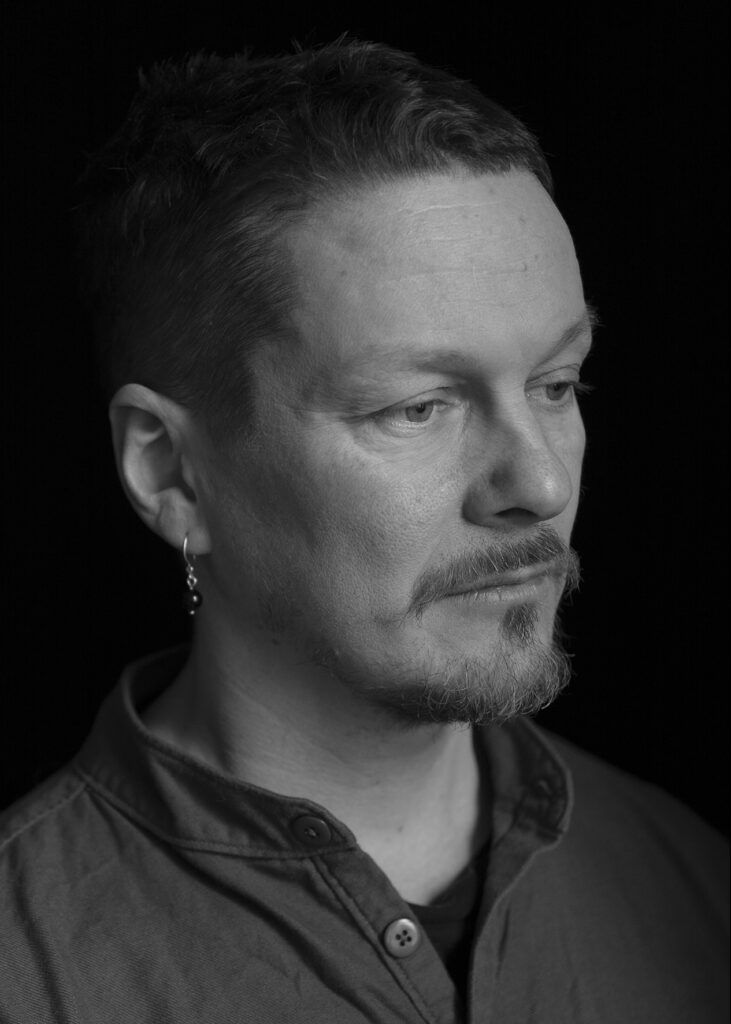
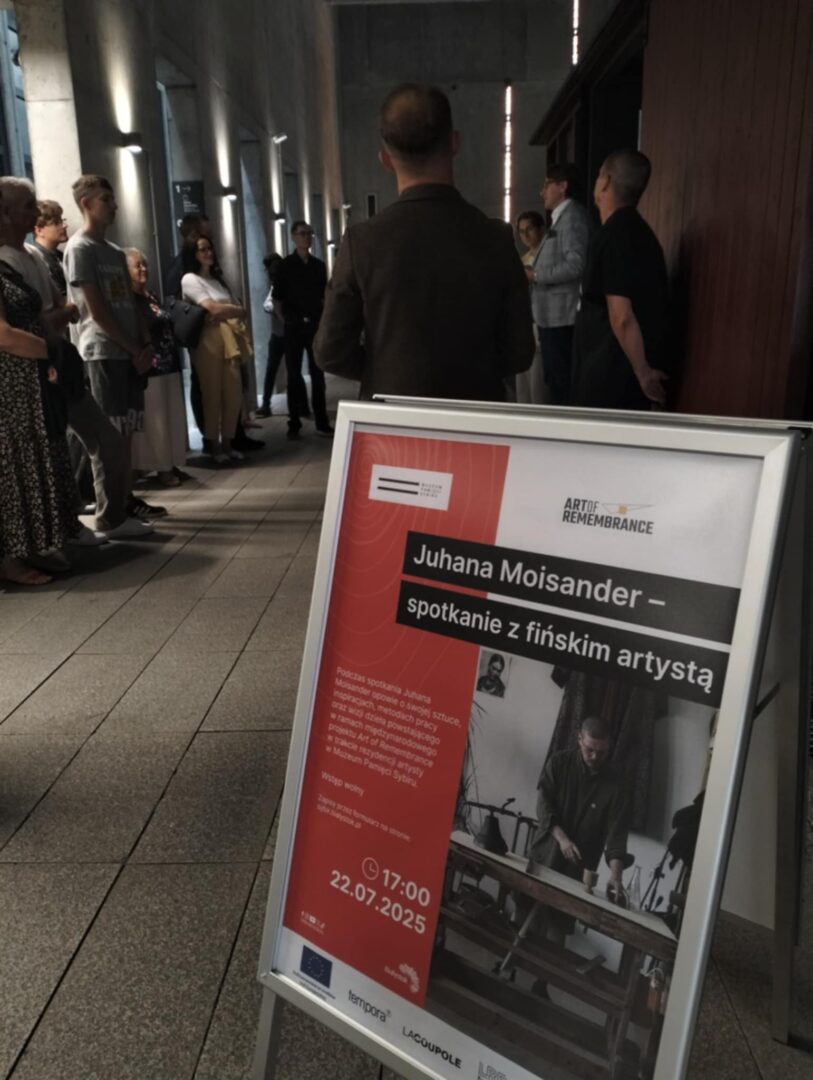
Juhana Moisander’s residency at the Sybir Memorial Museum in Białystok unfolded through a close engagement with a site marked by successive histories of deportation, displacement, and violence. The museum focuses on the fate of local populations deported to Siberia under Soviet rule and later subjected to Nazi occupation, histories that resonate strongly with Moisander’s own background as a descendant of Karelian evacuees. This parallel between Polish and Finnish wartime experiences provided an important conceptual anchor for his work.
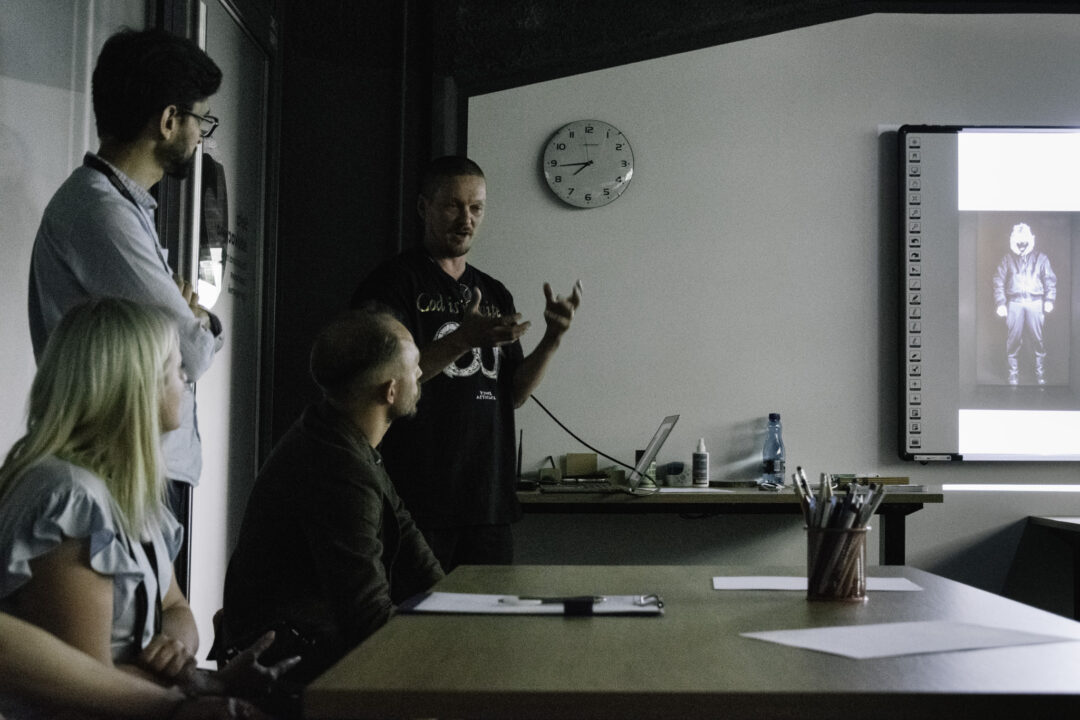
Moisander approached the residency through a combination of historical research, architectural observation, and artistic experimentation. His first visit to Białystok in summer 2025 allowed him to explore the museum’s collections and discuss themes with the curatorial team, crystallising the core idea of the work. A second, longer stay in late 2025 was dedicated to filming and testing installation possibilities within the museum context. Throughout the process, he was attentive to the political sensitivity of remembrance in Poland, where narratives of martyrdom and heroism remain strongly charged. Out of respect for local audiences, he deliberately avoided direct representation of horror, choosing instead to work through suggestion, symbolism, and emotional resonance.
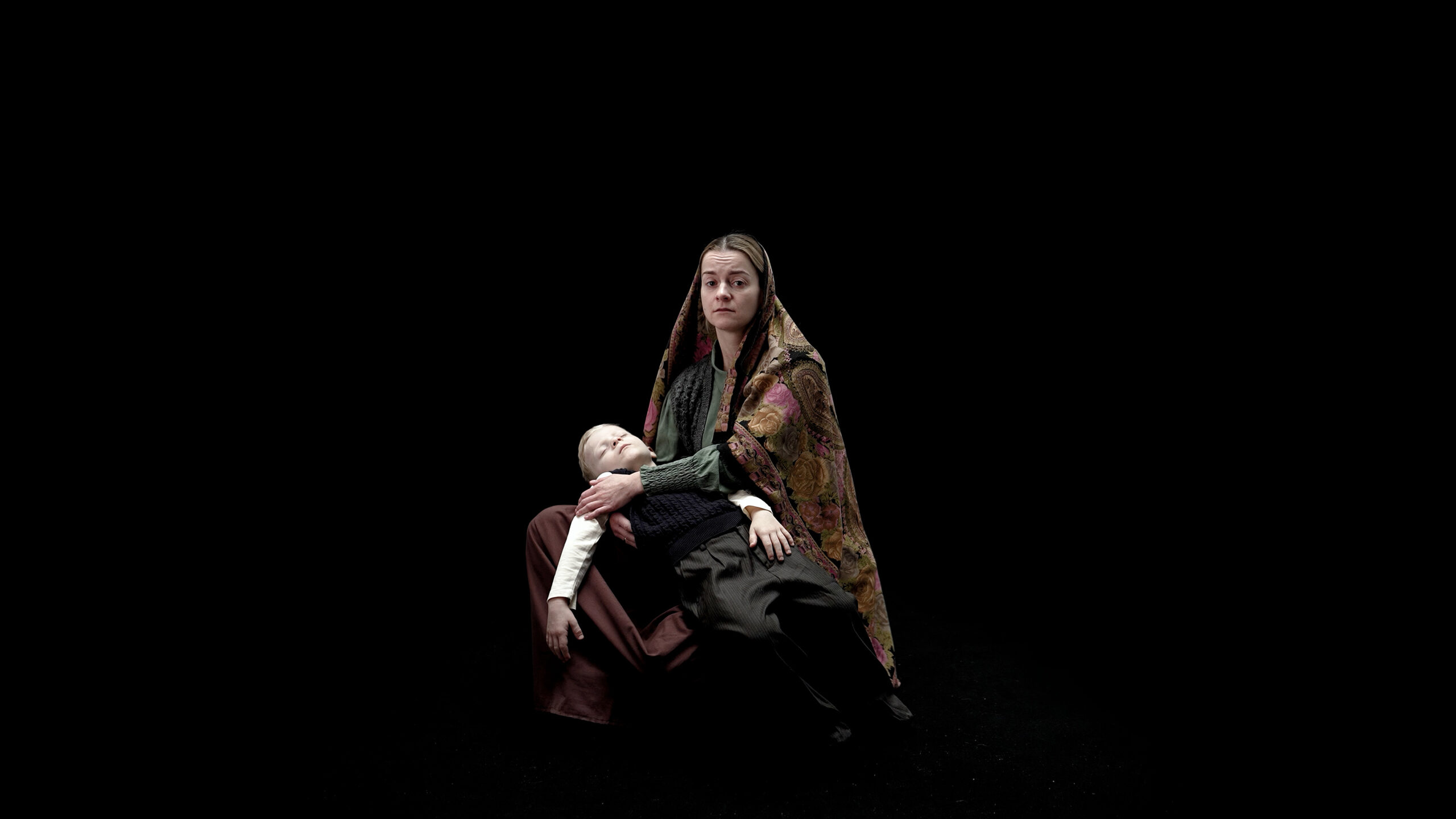
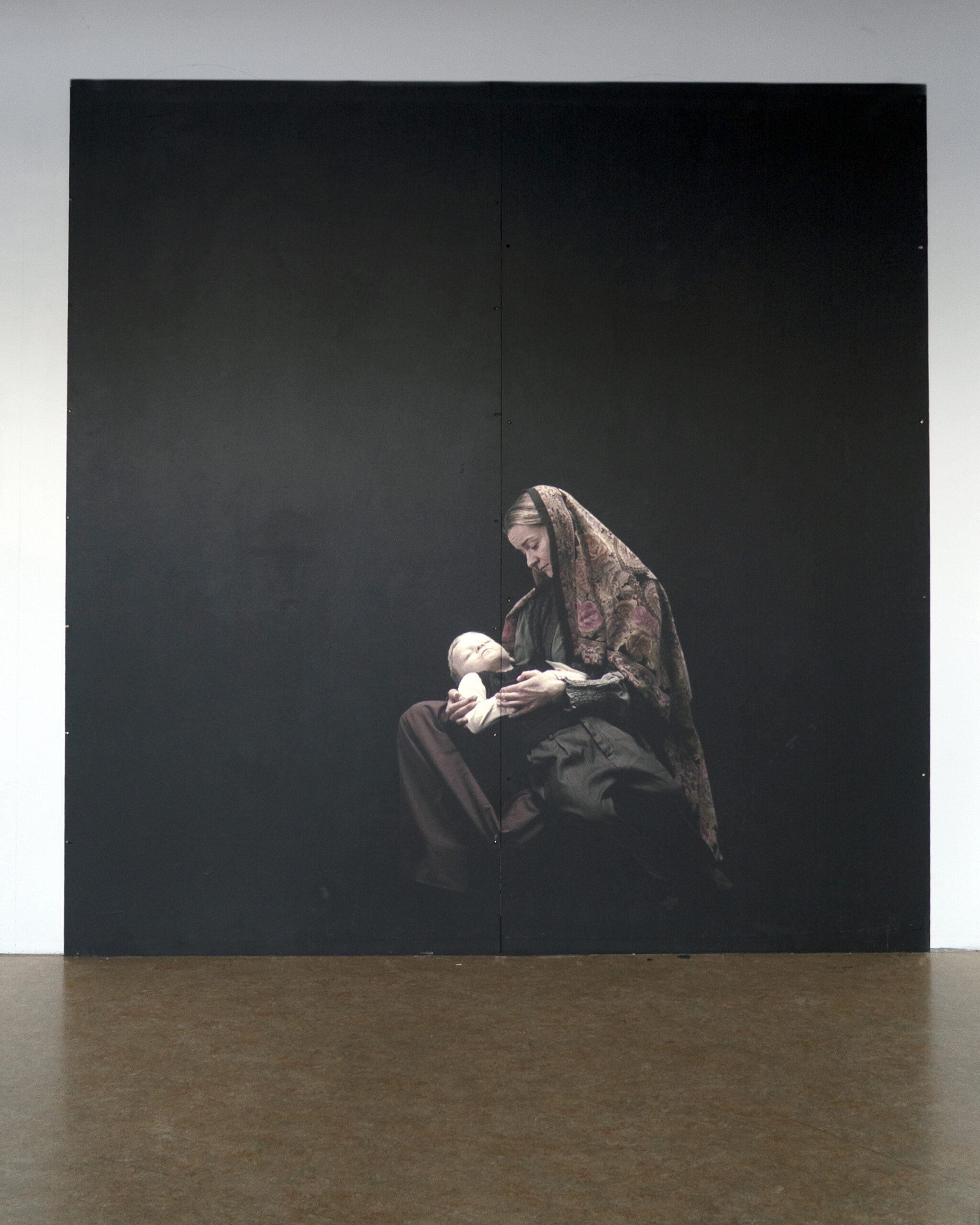
Central to Moisander’s methodology is the use of video, sound, and spatial composition as a unified, site-responsive whole. During the residency, he collaborated closely with a local actress and her young son, rehearsing and filming a restrained, intimate scene that draws on everyday gestures and interaction. The working process was deliberately slow and adaptive, shaped by the rhythms of the child’s presence and by repeated reflection on how image, sound, and space might convey historical trauma without illustrating it directly.
The residency thus became a space for careful translation: between personal and collective histories, between past and present, and between culturally specific references and a broader European visual language.
Gail Ritchie is a Northern Irish visual artist based in Belfast. Her practice explores the emotional impact of conflict, memory, and loss through a combination of drawing, sculpture, installation, and research. With academic training in both political science and fine art, Ritchie brings a multidisciplinary perspective to her work, investigating how histories are internalized and remembered across time. Her approach is deeply reflective and often engages with archival materials, personal narratives, and spatial environments that hold symbolic or emotional weight.
Ritchie’s work has been exhibited widely across the United Kingdom, Ireland, and internationally, including in exhibitions and projects focusing on remembrance, military experience, and the Troubles. Her long-standing interest in the ways memory is shaped by place and material culture continues to inform her evolving body of work. Her work is held in collections such as the National Museums of Northern Ireland and the Northern Ireland Government Collection. In 2025, Gail Ritchie received the Major Individual Artist Award from the Arts Council Northern Ireland in recognition of her artistic practice.
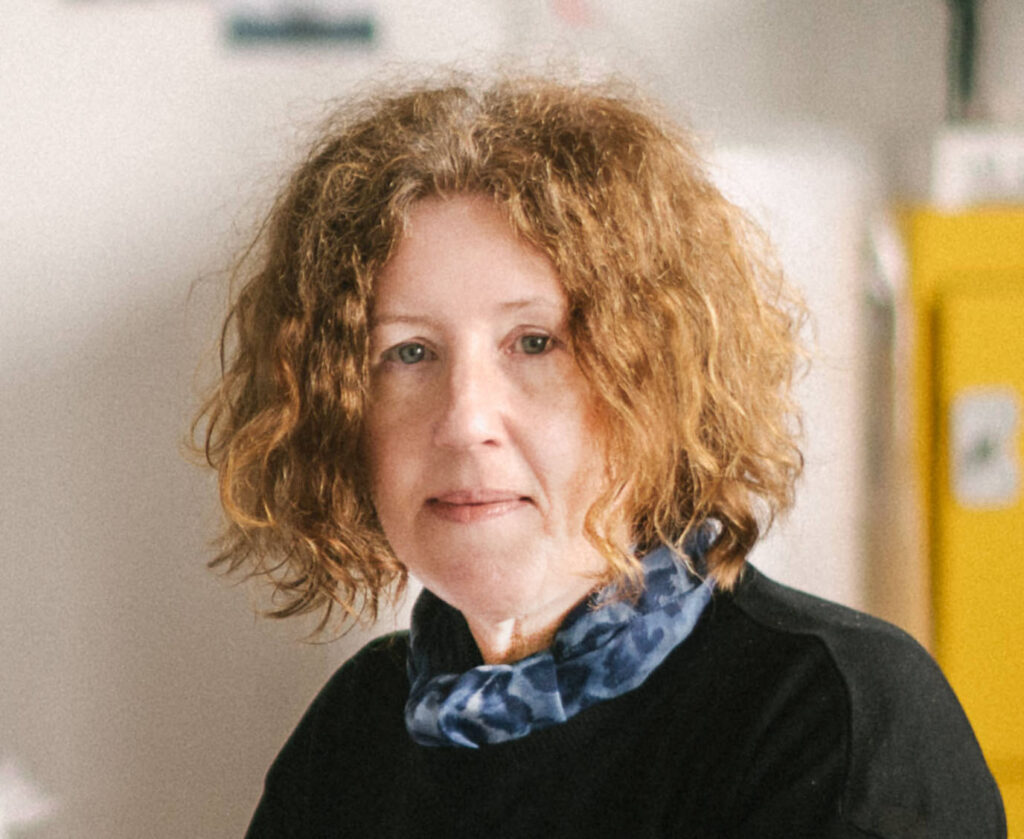
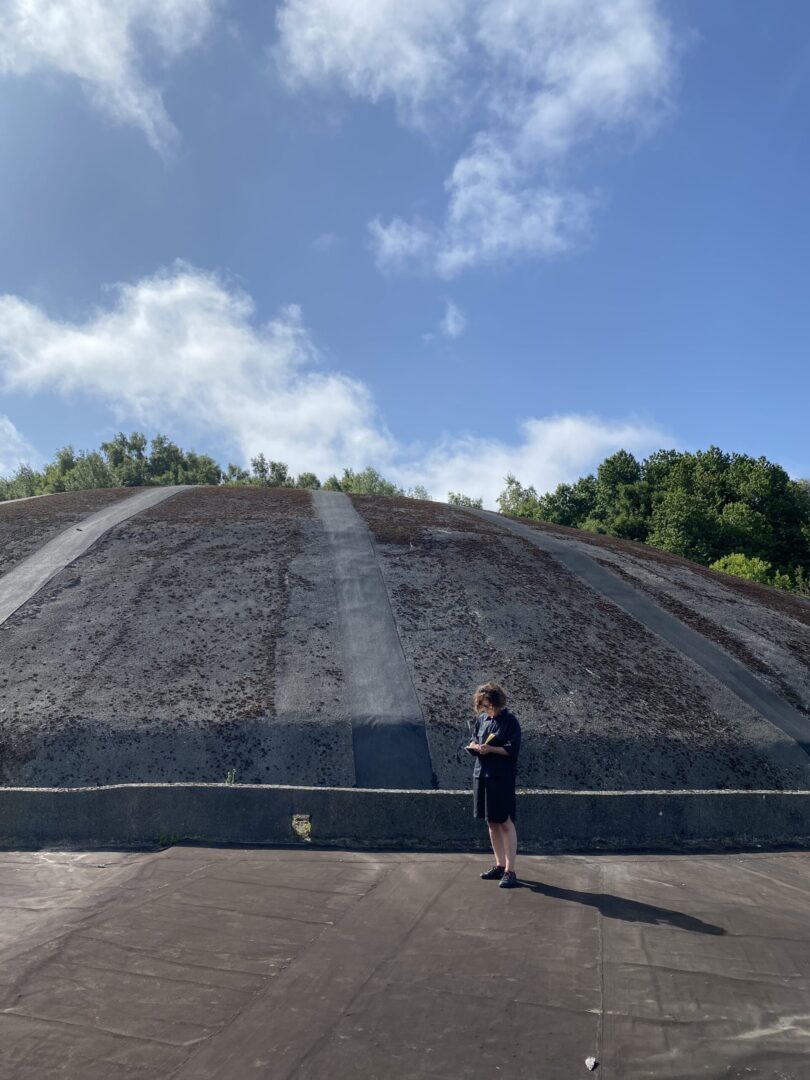
Gail Ritchie’s residency at La Coupole was shaped by prolonged immersion in a site where architecture, technology, and violence converge. From her first encounter with the monumental underground structure, the scale and density of the site, its tunnels, archives, and surrounding landscape, became central to her research. Rather than following a linear path, Ritchie adopted an open and exploratory working method, allowing ideas to emerge gradually through repeated visits, observation, and making.
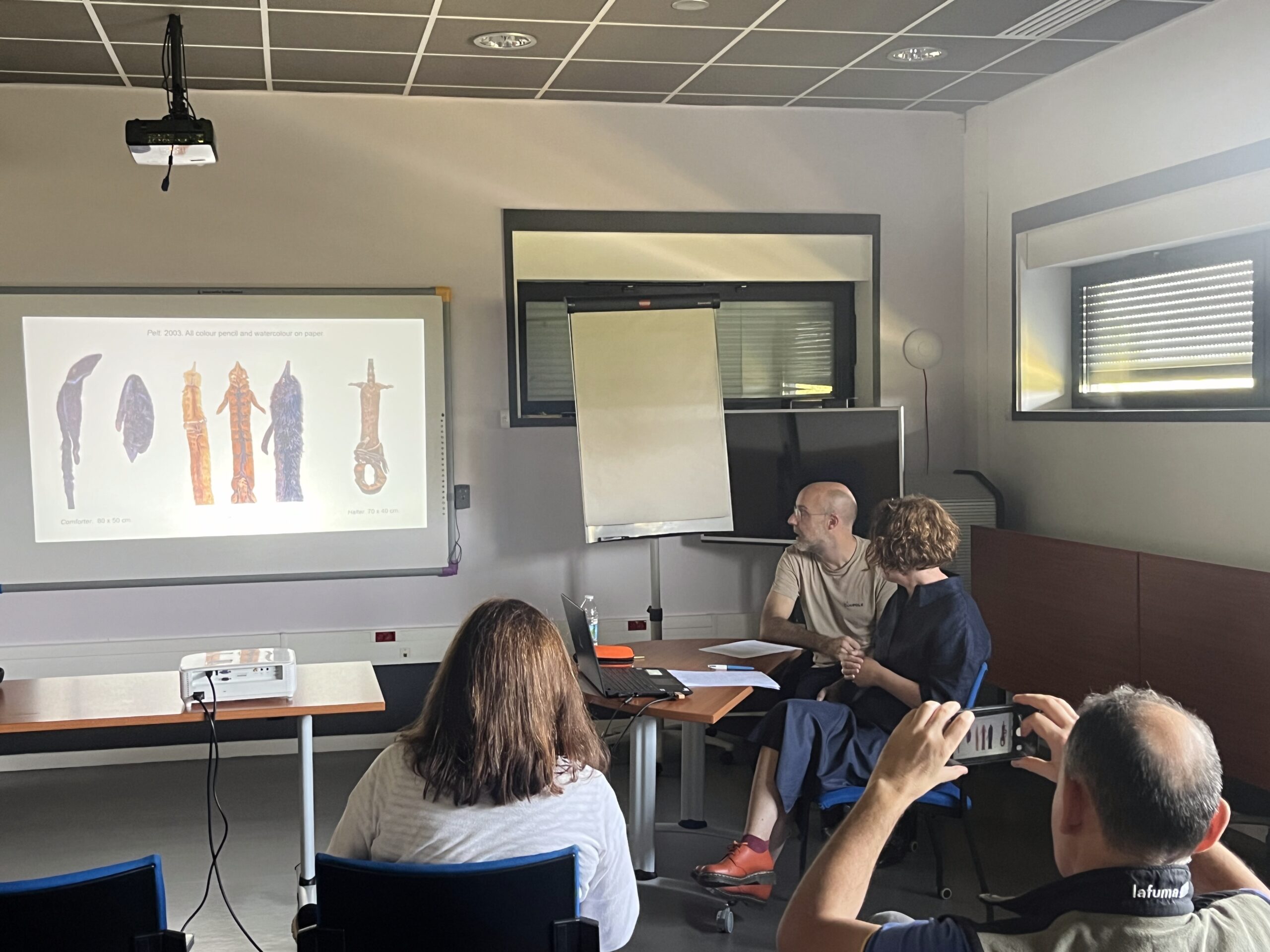
Having access to the archives and to closed sections of the tunnels, as well as to the expertise of the La Coupole team, enabled her to move between historical material, architectural experience, and contemporary interpretation. Her daily presence on site, travelling from Saint-Omer, working in a small studio within the museum, and observing visitors, anchored the residency not only in research but also in lived experience.
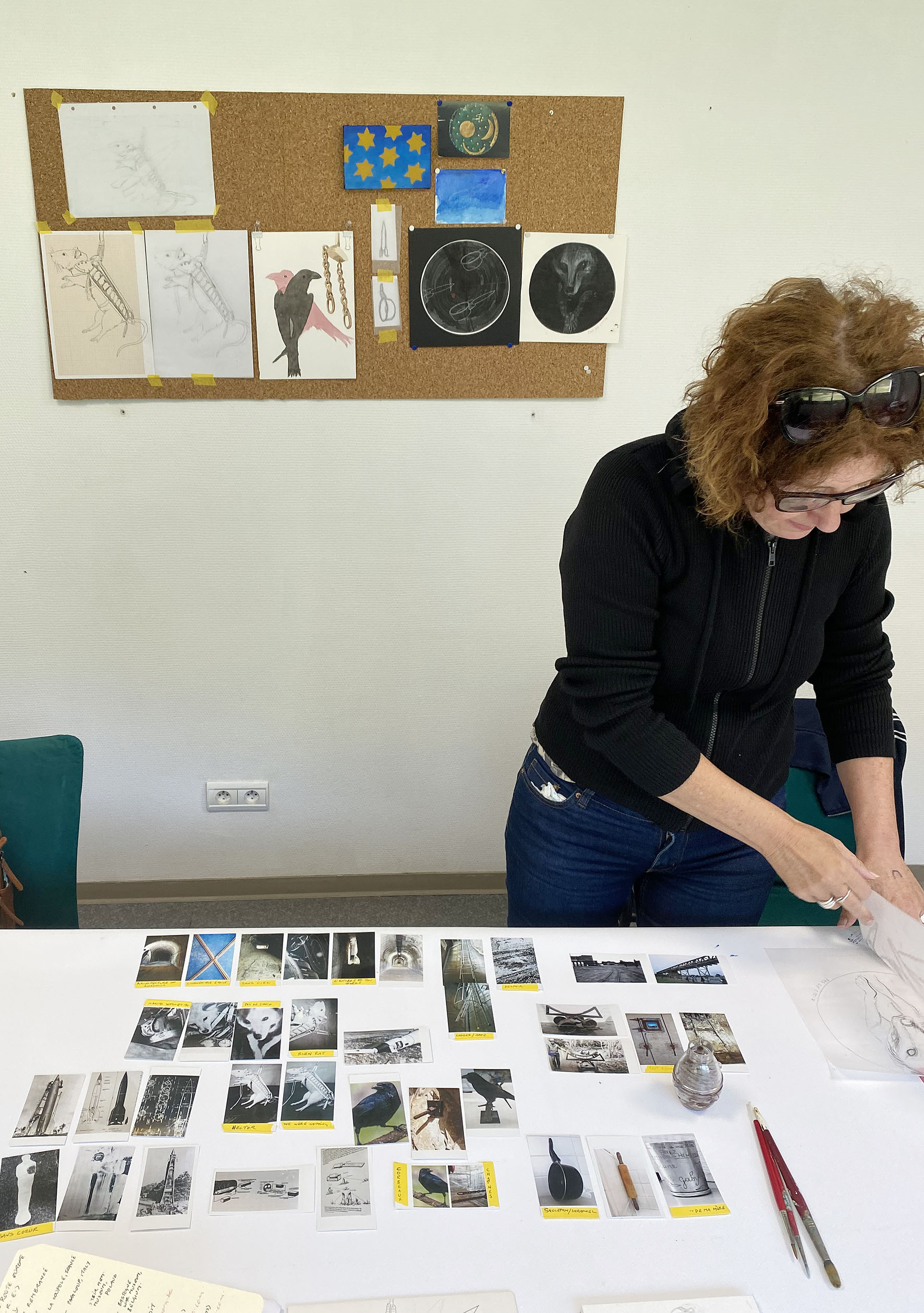
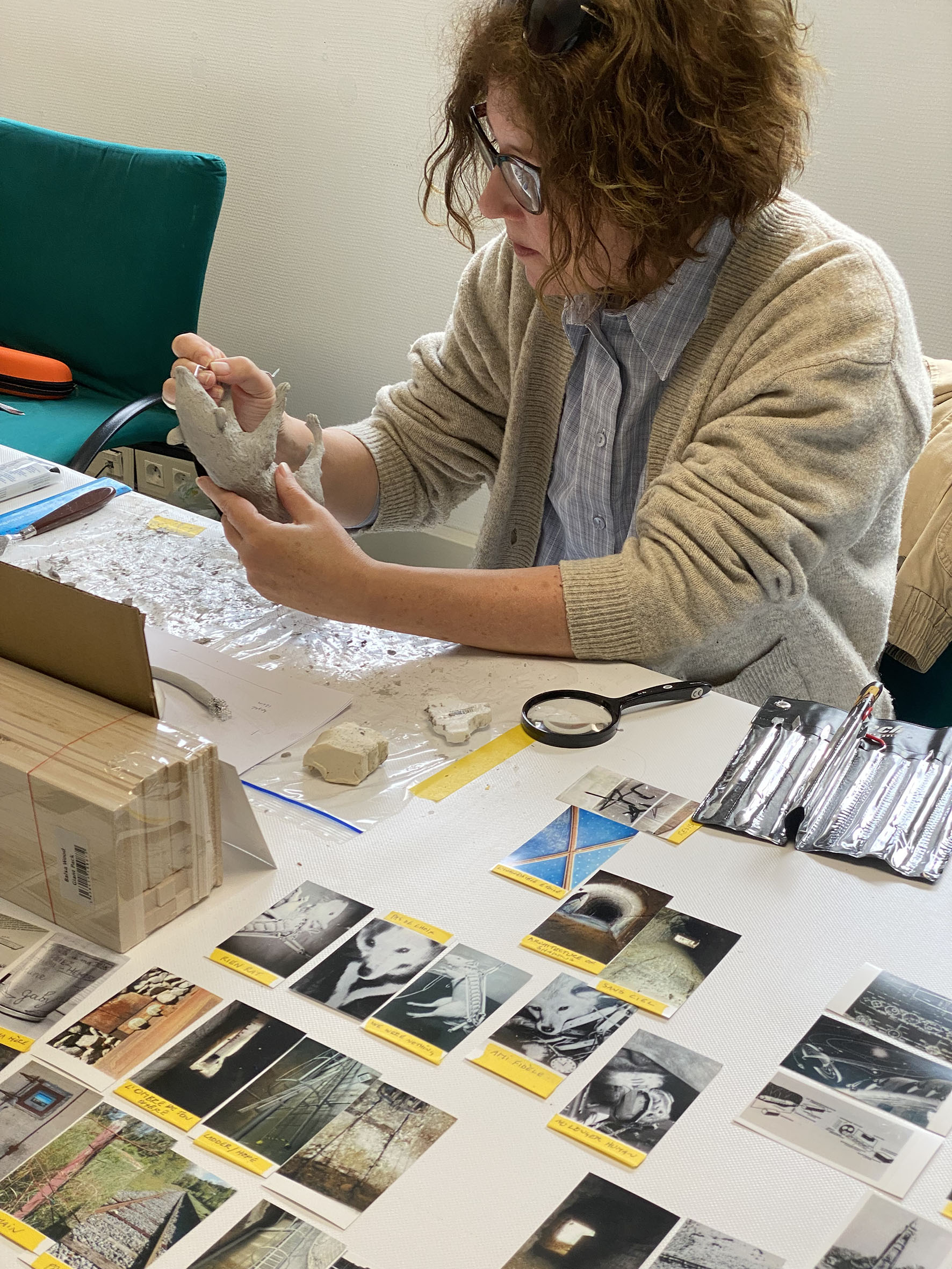
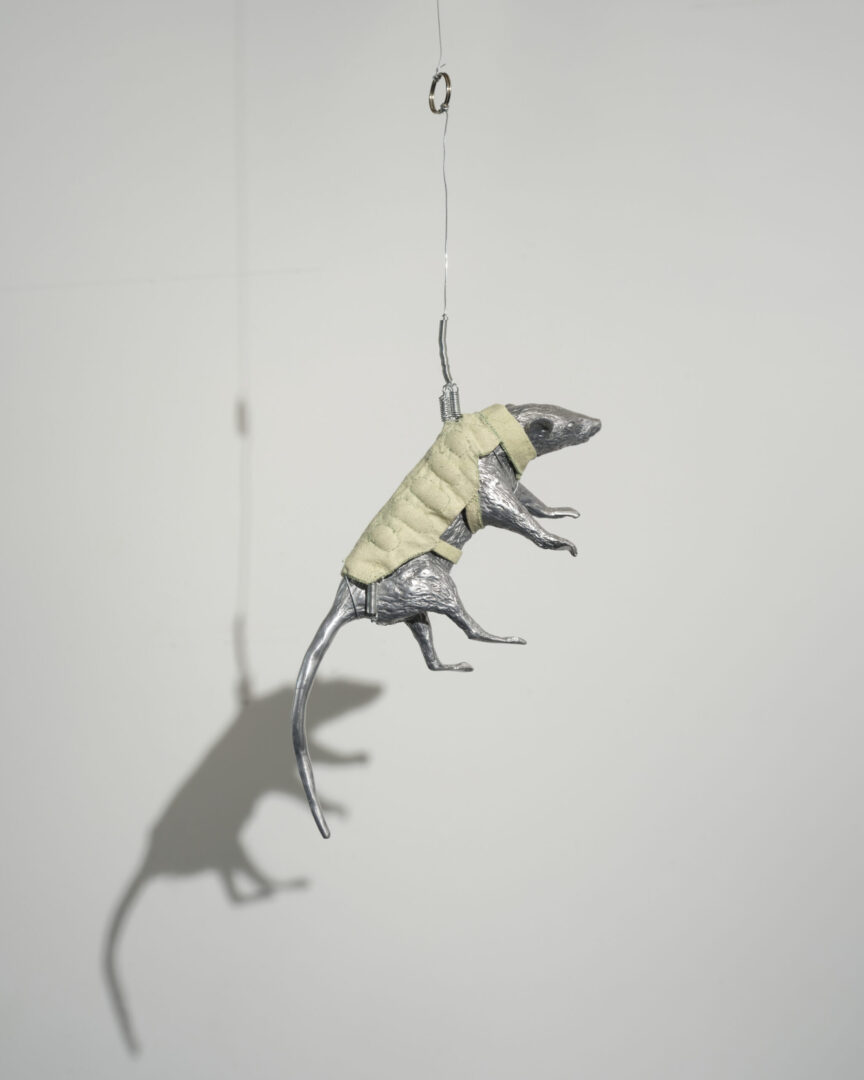
A recurring tension in Ritchie’s engagement with La Coupole was the coexistence of opposing narratives: scientific ambition and forced labour, technological progress and human suffering, dreams of space exploration and the realities of exploitation. The archive revealed fragments that resonated deeply, from Maurice Bourdon’s recipe notebook, an act of imaginative survival under deprivation, to photographs of Hector, a laboratory rat sent into space and later killed. These encounters sharpened her interest in how lives, human and non-human, are shaped, instrumentalised, and transformed by systems of power.
Time and transformation emerged as key structuring concepts. The site itself has undergone multiple transformations, from quarry to rocket base, from bombed ruin to museum reclaimed by nature. Ritchie’s residency allowed her to think through these layers slowly, letting materials, metaphors, and questions accumulate. Her process, rooted in drawing, modelling, and assemblage, treated making as a form of thinking: provisional, associative, and attentive to the unresolved nature of memory.
Video installation – 5,55 min
2026
Rather than replicating the religious motif of the Pietà, Moisander uses it as a visual entry point embedded in Polish cultural memory. The figures appear at human scale within a darkened, enclosed space, inviting an intimate encounter. Their stillness, interrupted by subtle movement, evokes care, vulnerability, and suspended time.
Sound is central to the work. Drawing on children’s songs and lullabies as carriers of collective memory, Moisander explores how gentle forms can hold rupture and loss. Soundscape in MATKA references a Polish lullaby whose calm surface conceals unsettling turns. In this way, sound operates as an emotional interface linking personal experience to historical displacement.
Lyrics – Sparks´tale
From the ashpan, toward Wojtuś,
A little spark is blinking,
Come, I’ll tell you a fairy tale,
The tale will be long.
Once there was a princess,
She fell in love with a minstrel,
The king threw them a wedding feast
And that’s the end of the tale…
There once was Baba Yaga,
She had a candy cottage,
And inside that little house,
Strange things-hush, the spark went out.
Wojtuś looks, he looks, he thinks,
His little eyes are teary,
“Why did you tell me a lie?
Wojtuś will remember.”
“I’ll never believe you again,
Little spark so small,
You shine a moment, then go dark
And that’s the whole tale.”
There once was a king, there was a page,
There was a princess too,
They lived on seas, they knew no storms
It’s absolutely true.
The king was in love, the page was in love,
They both loved the princess,
And she loved them both as well
They all loved each other.
But then one day something happened,
Terrible beyond words:
A dog ate the king, a cat ate the page,
And a mouse ate the princess.
But don’t be sad, beloved child,
Don’t let this story grieve you
The king was made of sugar sweet,
The page of gingerbread,
And the princess, marzipan.
Installation with coloured glass plates, Inkjet-Prints, flowers and herbs, screen printed silk
2026
Holding a pencil
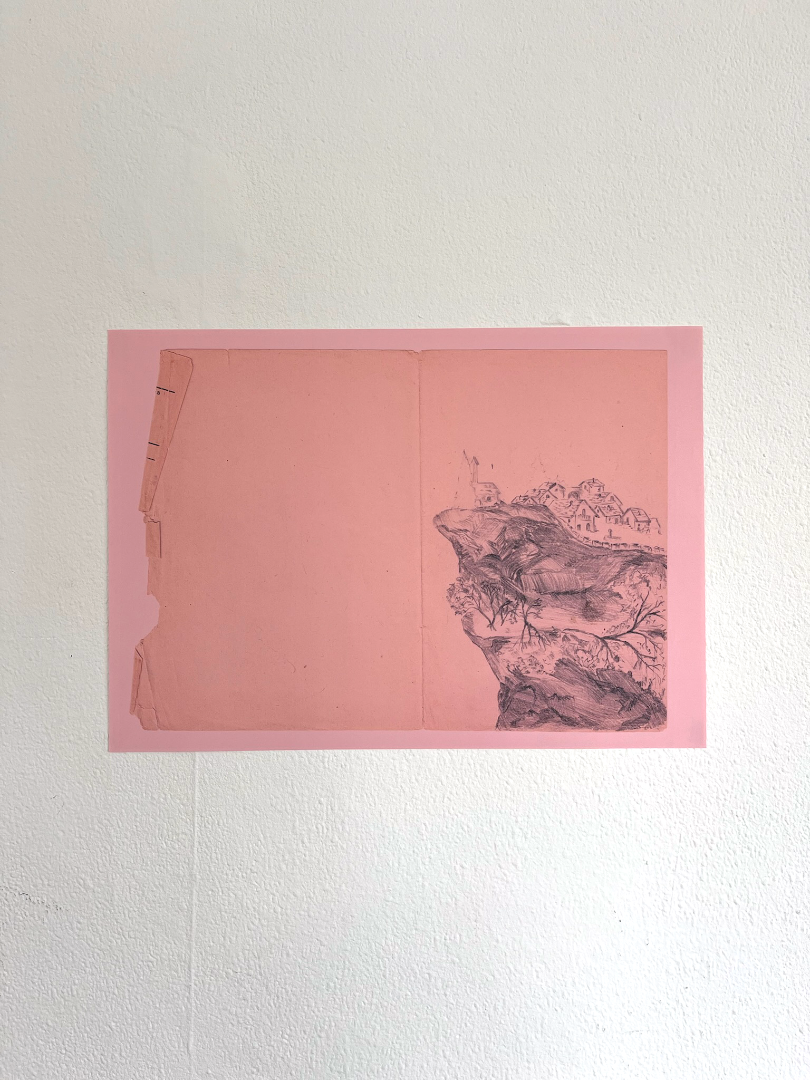
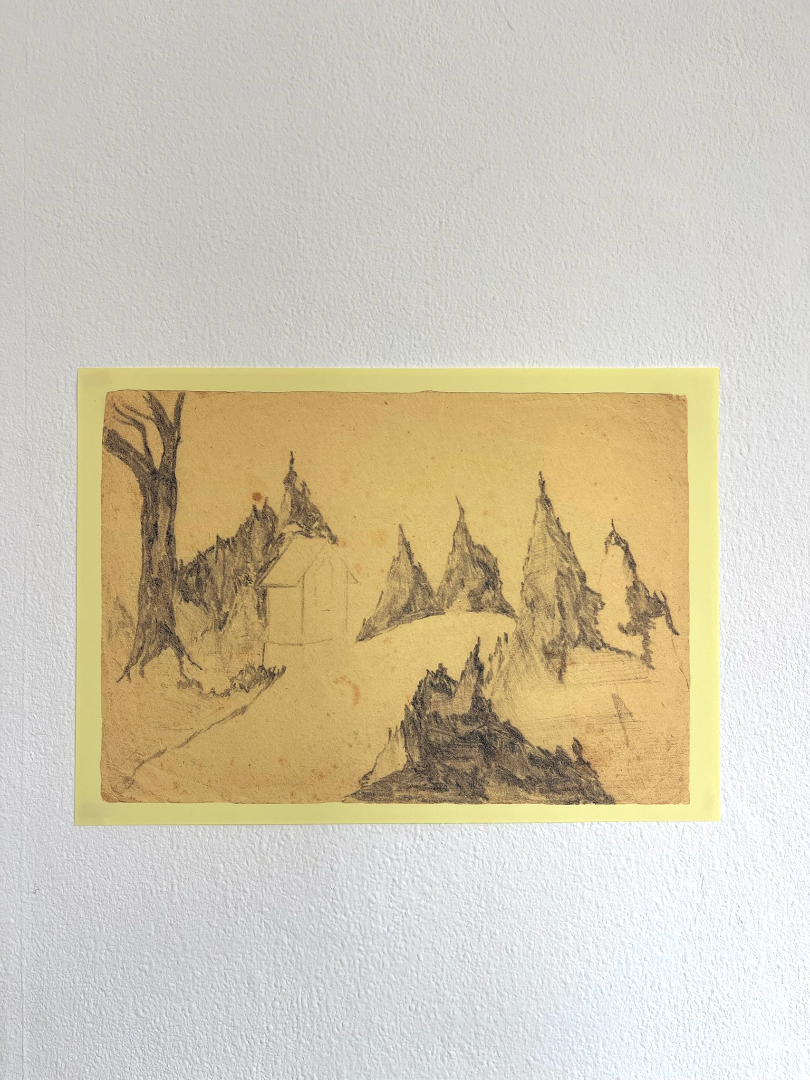
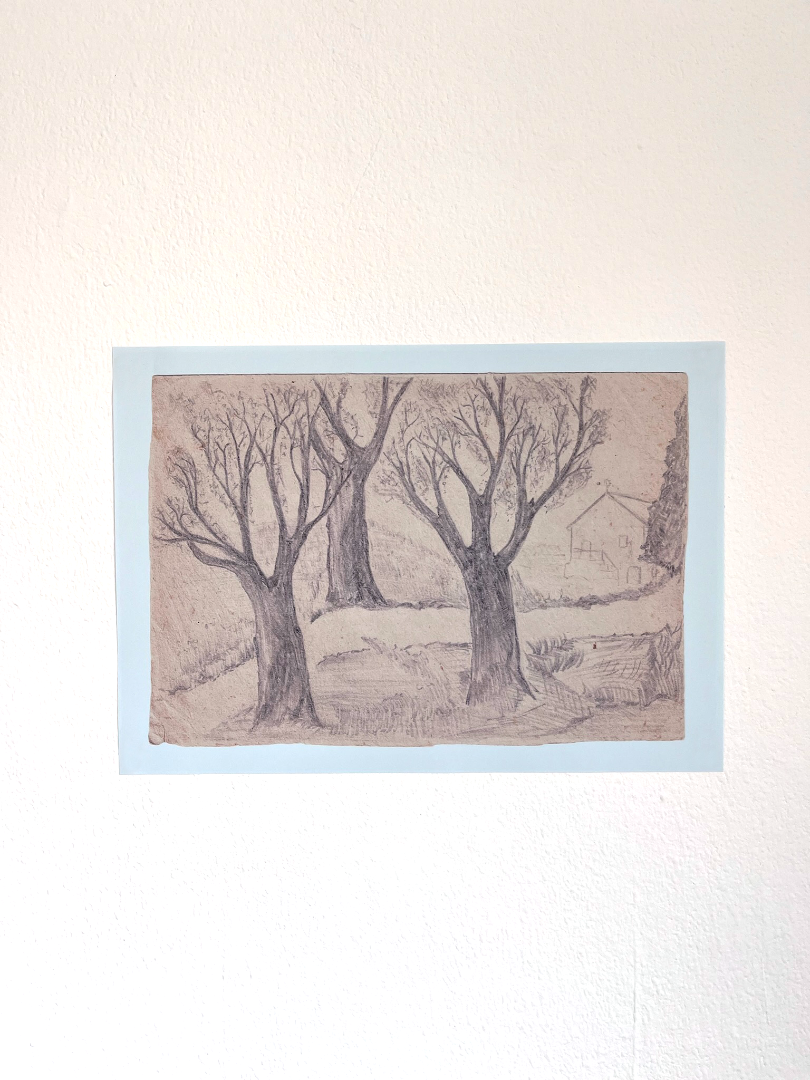
Inkjet-Prints on coloured A3 paper, drawings from the diary of Lidia Beccaria Rolfi, KZ Ravensbrück, 1945
Series of drawings from Lidia Beccaria Rolfi during her imprisonment in Ravensbrück. These imagined landscapes, evoking her native Piedmont region, functioned as mental refuges and survival strategies. Printed on coloured A3 paper, they are displayed in a non-monumental manner, emphasizing vulnerability, ephemerality, and the provisional nature of memory.
Stratum, Substratum
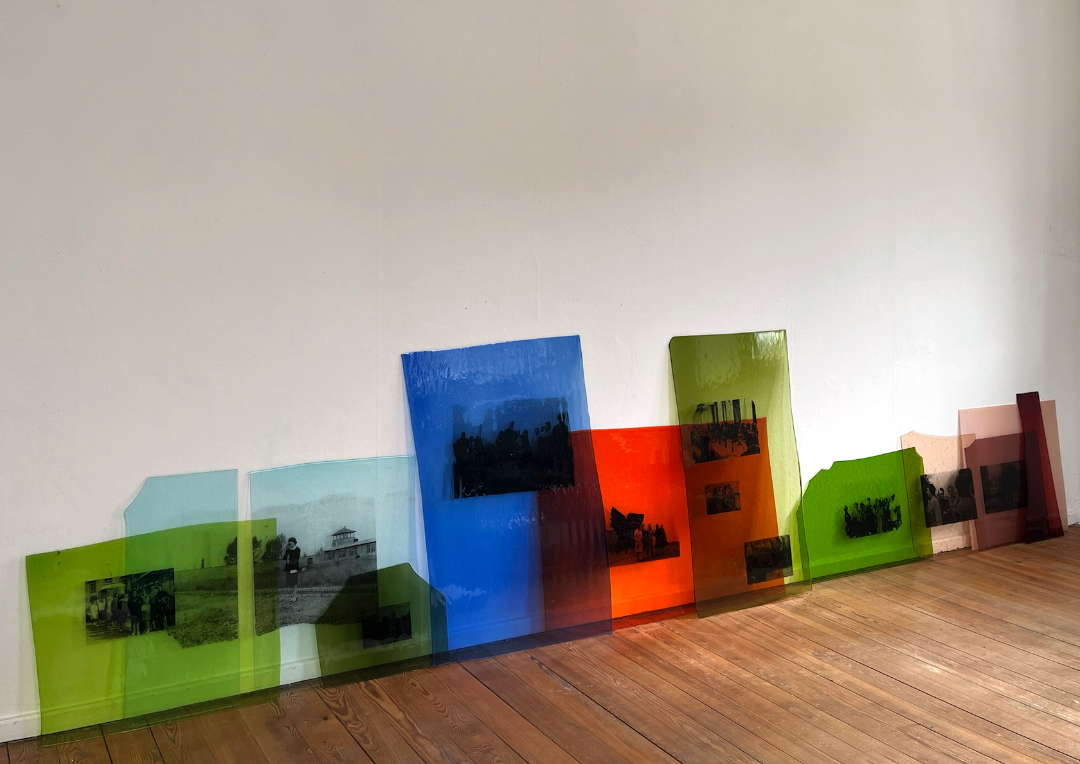
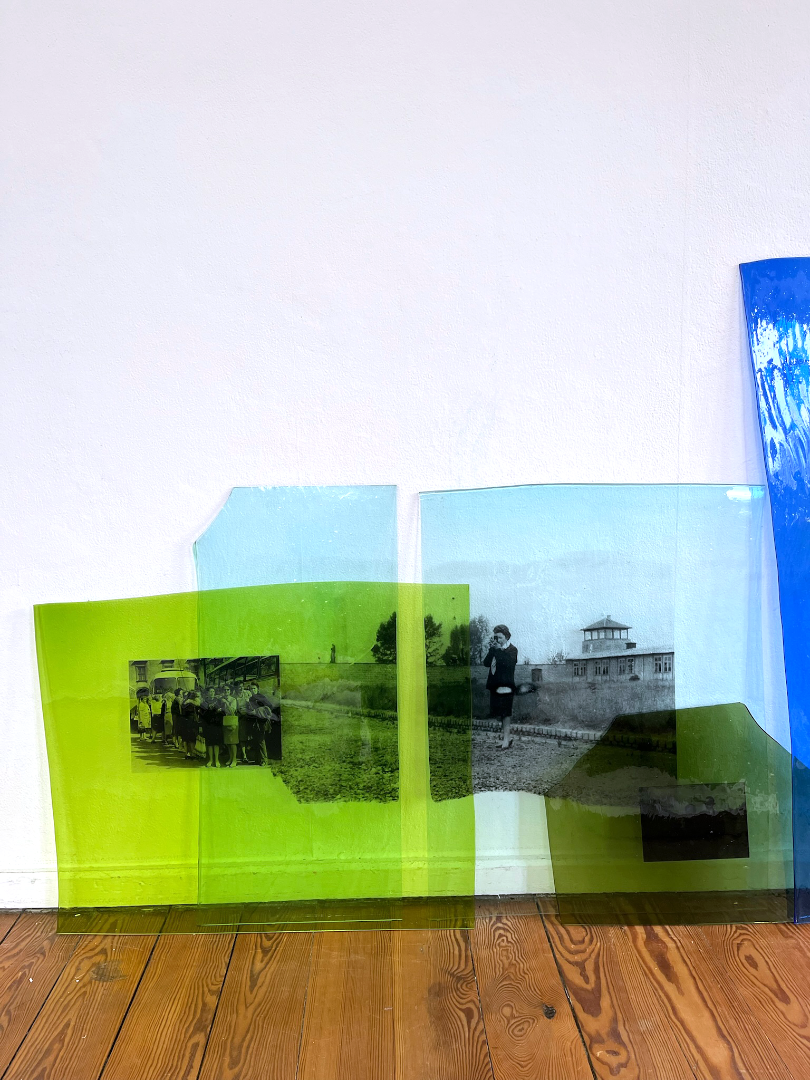
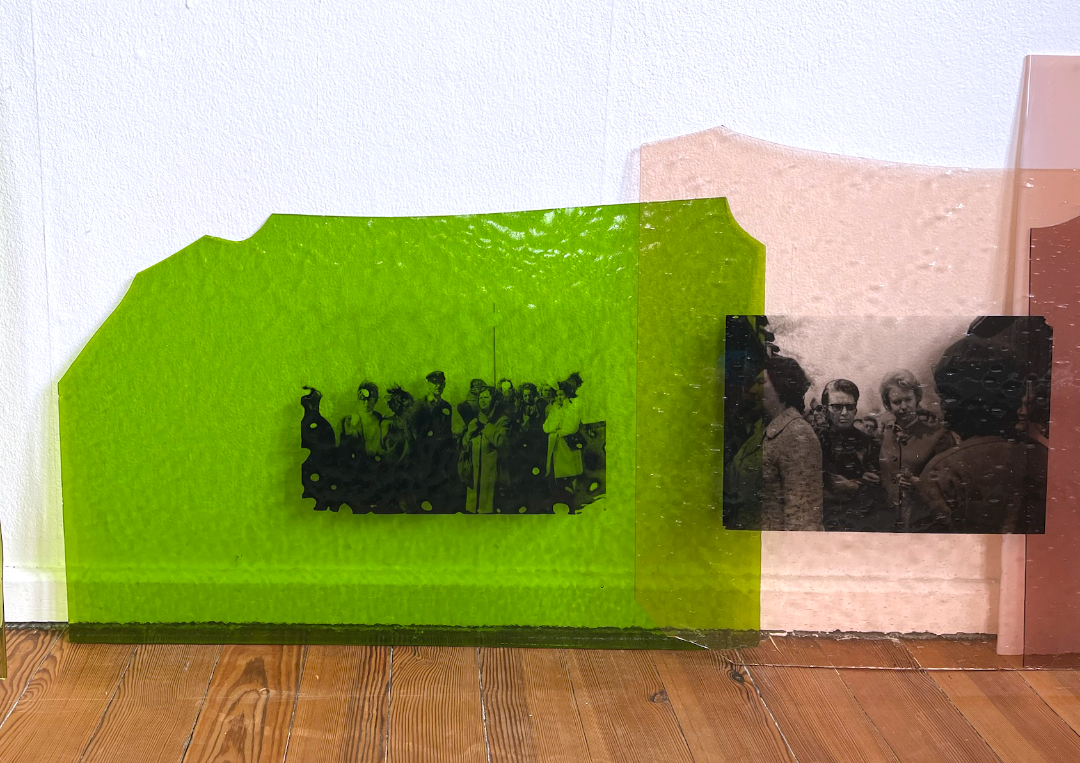
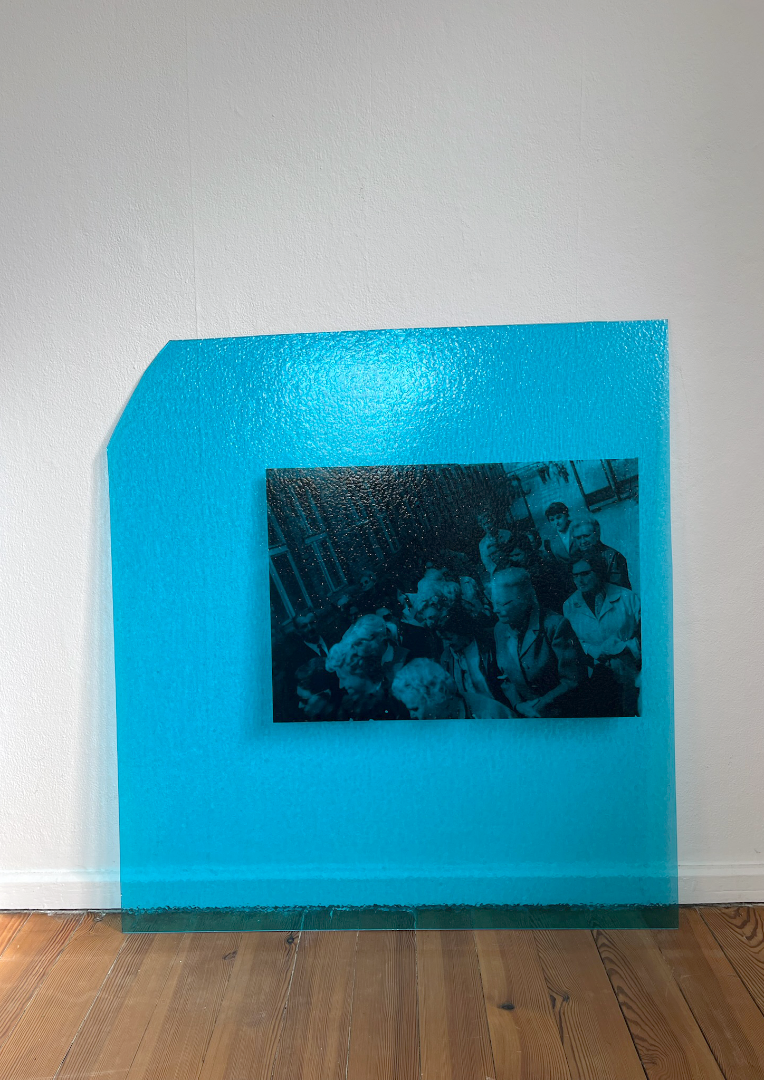
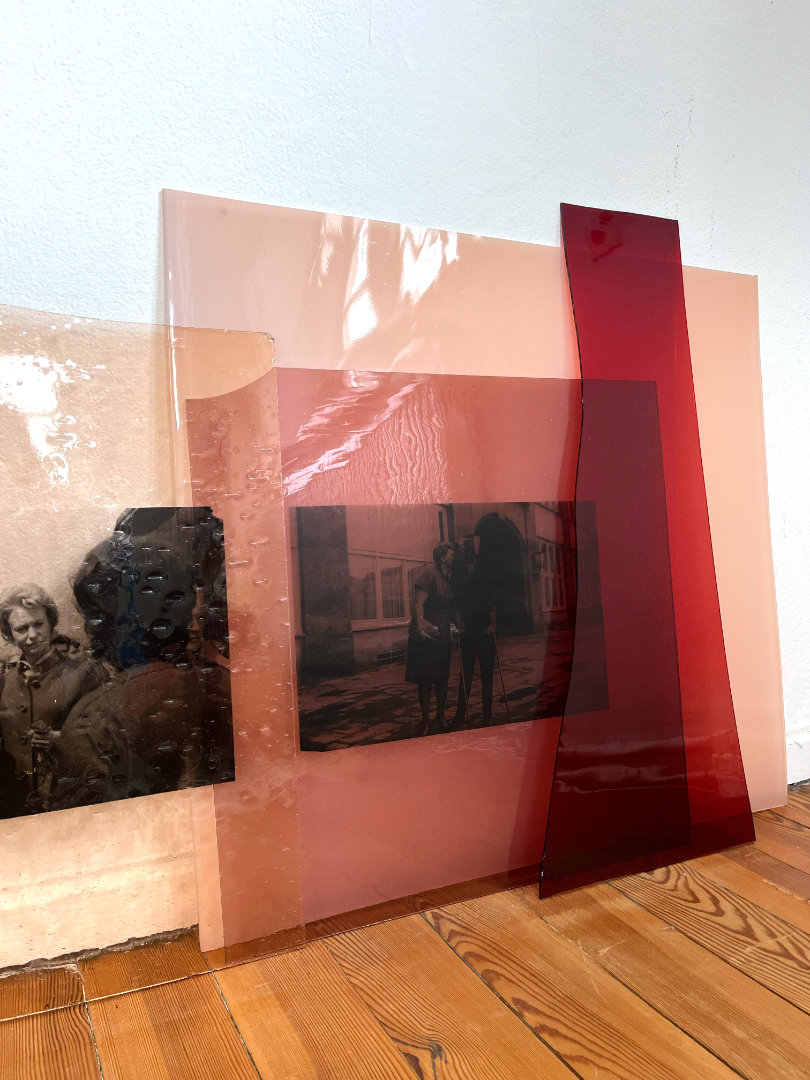
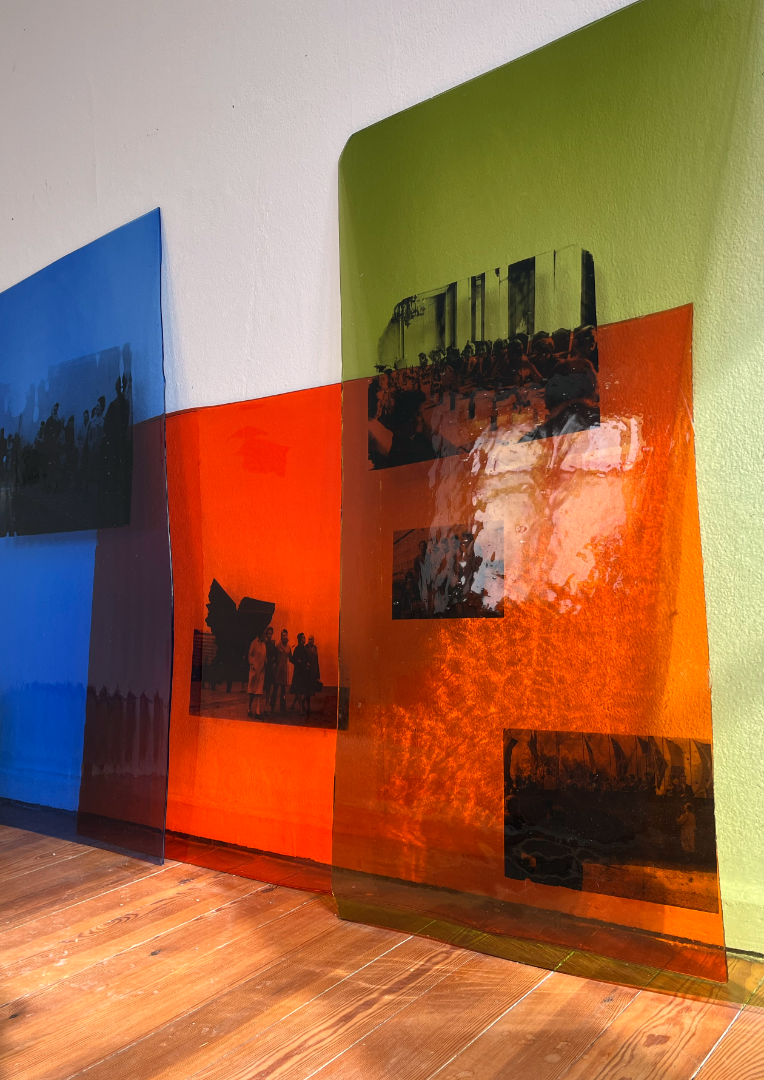
Arrangement of coloured glass plates, photographs from Lidia Beccaria Rolfi’s family archive, KZ Ravensbrück, other Concentration Camps, 1960ies
Photographs from the Rolfi family archive, screen-printed onto colored, mouth-blown glass plates with deliberately broken edges. They show Lidia Beccaria Rolfi at different stages of her life, alongside fellow survivors with whom she maintained lifelong bonds. The glass plates evoke both the intimacy of private archives and the precariousness of memory. This reflects the fragility of transmission and the continuous labor required to keep remembrance alive.
Tissue
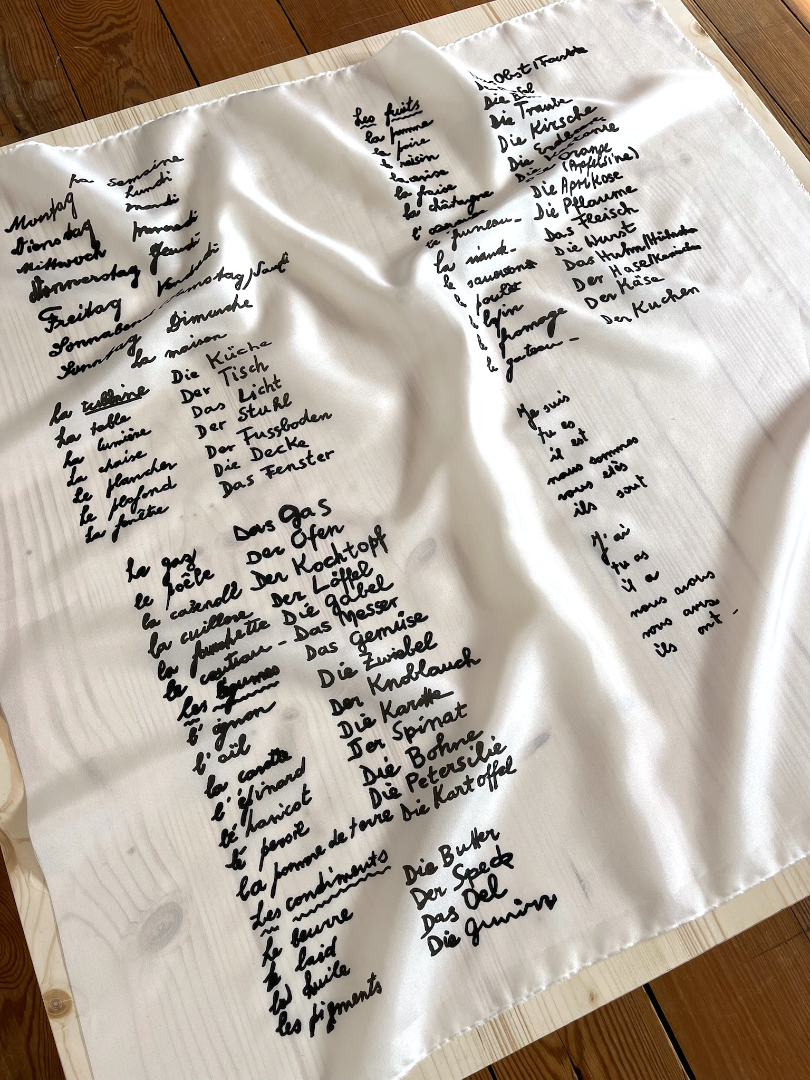
Screen print on silk, 70x70cm, textfragment from the diary of Lidia Beccaria Rolfi, KZ Ravensbrück, 1945
Tragkraft (Carrying capacity)
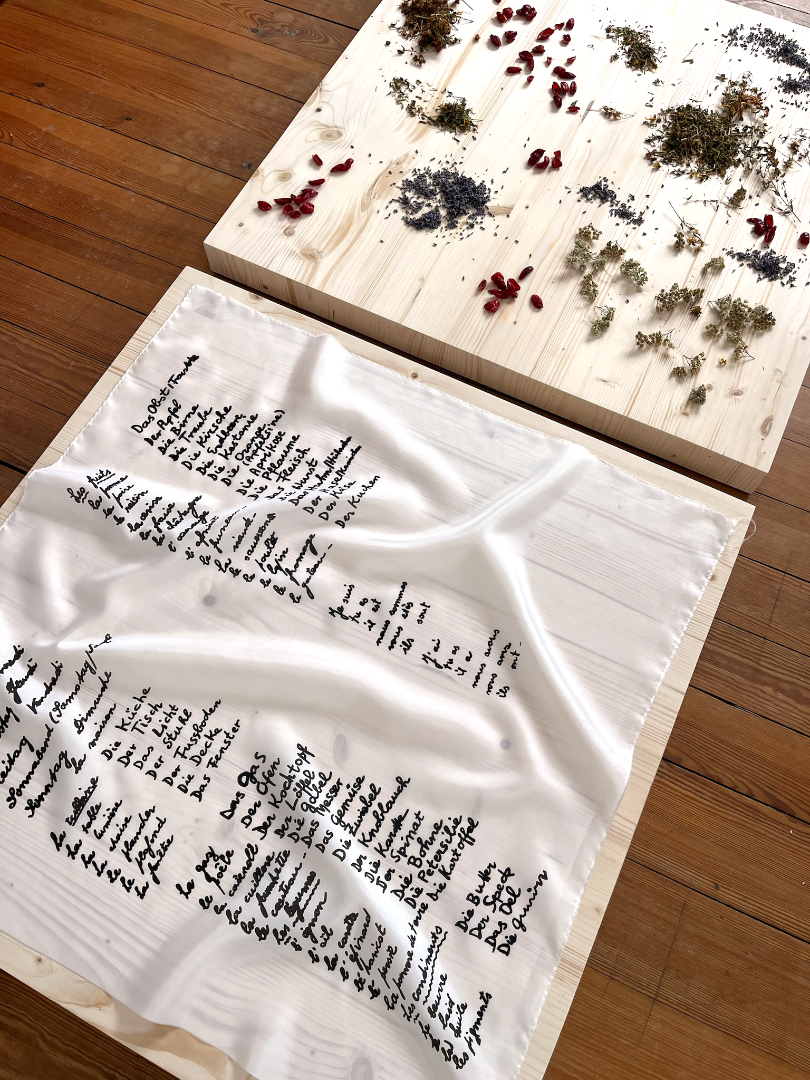
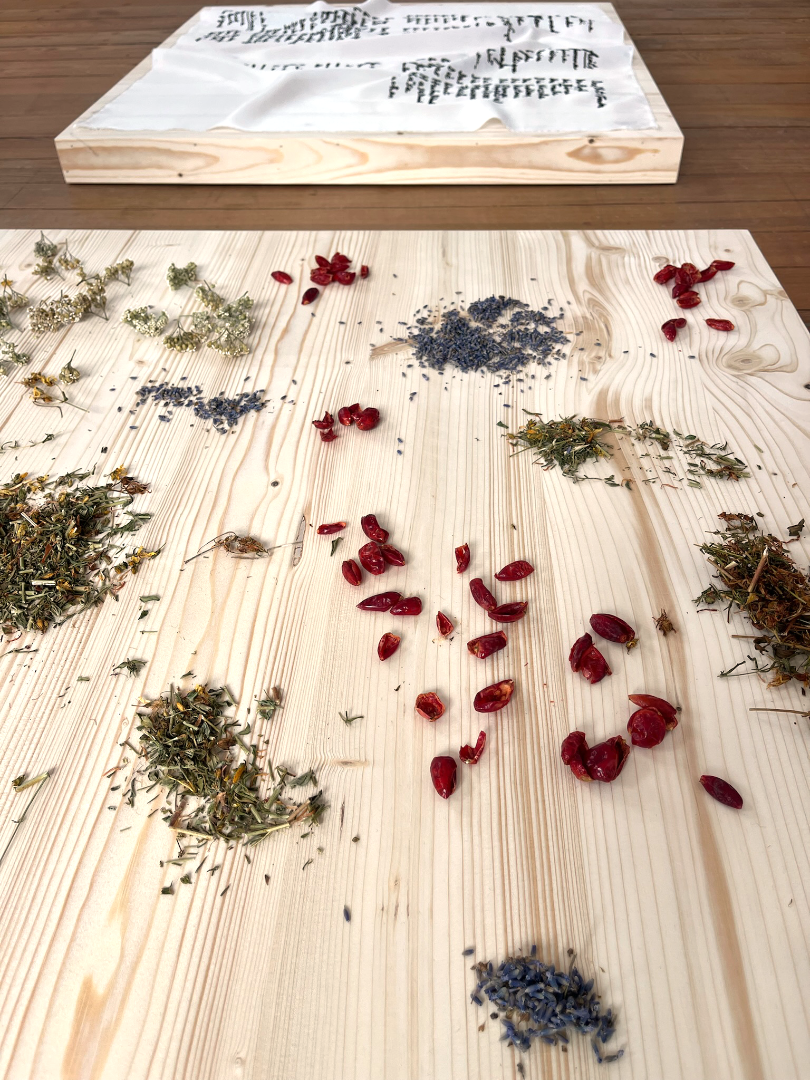
Flowers and herbs collected in summer 2025 together with Cooperative Germinali in Paraloup
Lidia Beccaria Rolfi’s handwritten diary, listing days of the week, domestic spaces, verbs, and foods in French and German. Enlarged and placed on the floor, the text recalls her effort to learn the language of the oppressor as a pragmatic act of survival, while also expressing hunger and longing. Herbs and plants collected in Paraloup are carefully arranged. They were selected for their healing, symbolic, and nutritional qualities, connecting historical experiences of deprivation with practices of care, nourishment, and ecological knowledge.
2 piezographic prints framed
2025
Space Age Dawn, depicts century-old conifers standing on the former V2 launch site of the Bois du Beleu. Their asymmetrical growth patterns are the lasting traces of the fire caused by the rocket launch on 8 September 1944. These images place the fragile lives of two trees in relation to a major technological threshold: the first human-made object to reach space, achieved through a weapon of war. The photographs displace the narrative of progress from machinery to living matter, allowing time itself to register history.
14 piezographic prints frames
2025
Stations of the Cross documenting improvised wooden crosses assembled by visitors in the Bois Jacques battlefield. Made from branches gathered on site, these modest memorials form a contemporary ritual rooted in nature. Structured as a sequence of fourteen “stations,” the series is situated within the continuity of these anonymous gestures, where remembrance is enacted through repetition rather than fixed form.
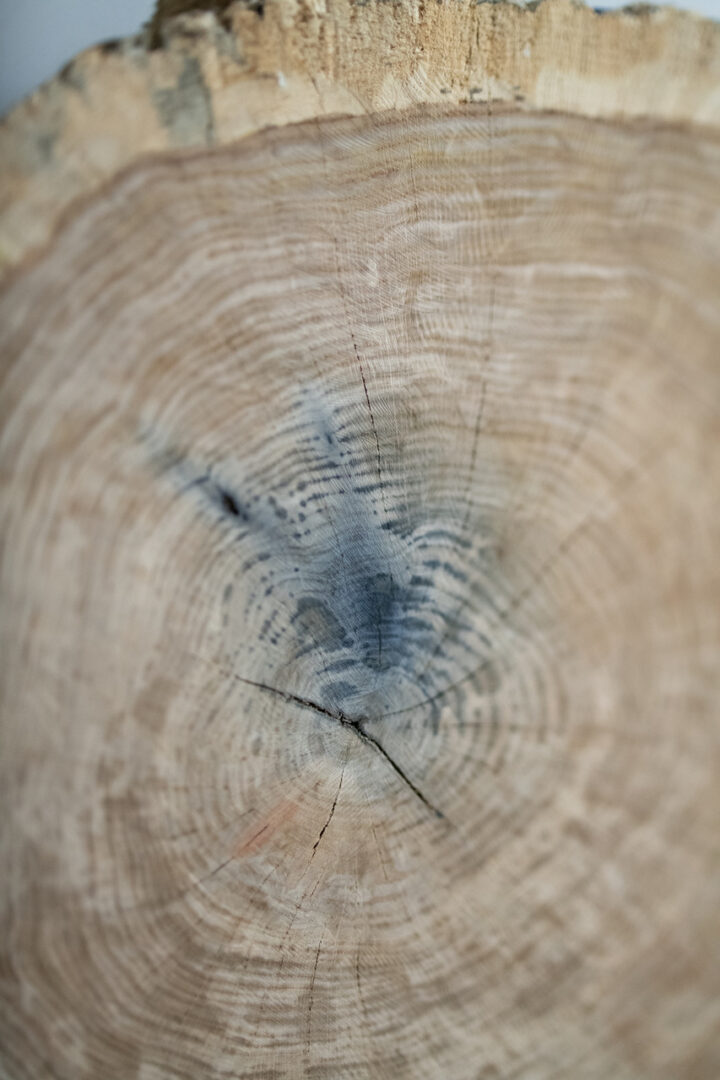
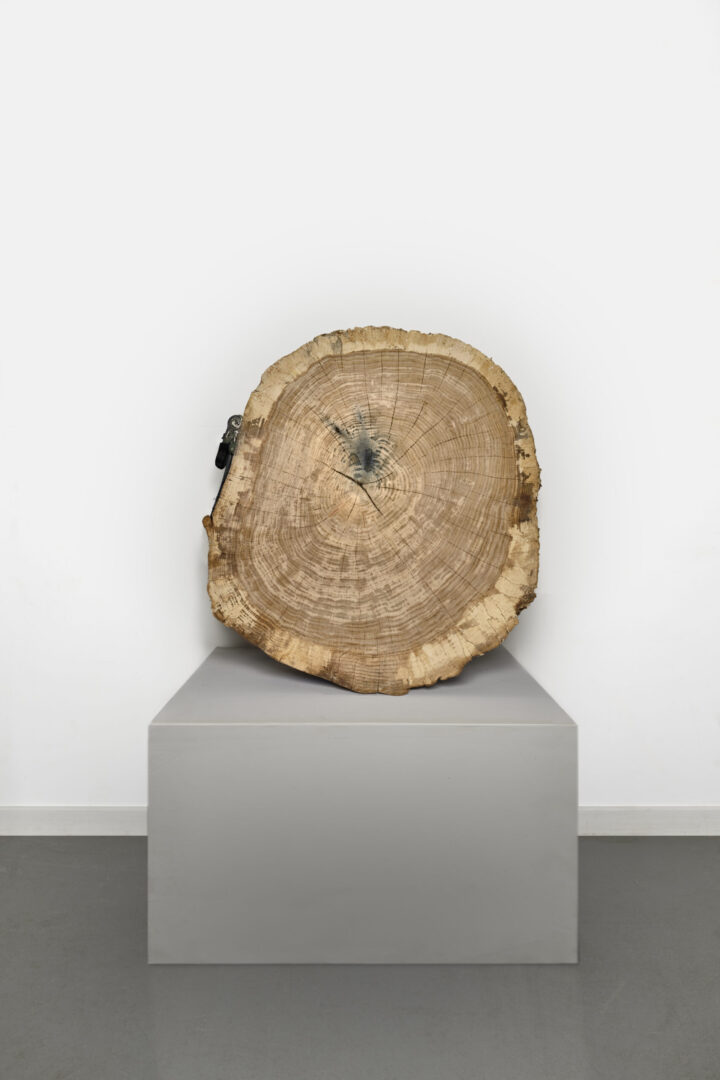
Section of an oak trunk with embedded shrapnel
2025
War Tree presents a section of an oak trunk with embedded shrapnel, recently collected in the Bizory sector, where fighting took place in 1944–1945. Barely perceptible from the outside, the metal fragments are revealed through the cut surface of the wood, where bluish oxidation runs along the growth rings. The work exposes a memory inscribed deep within matter, transforming the tree into a silent witness and a natural record of time, violence, and regeneration.
63 prints framed with mount
2025
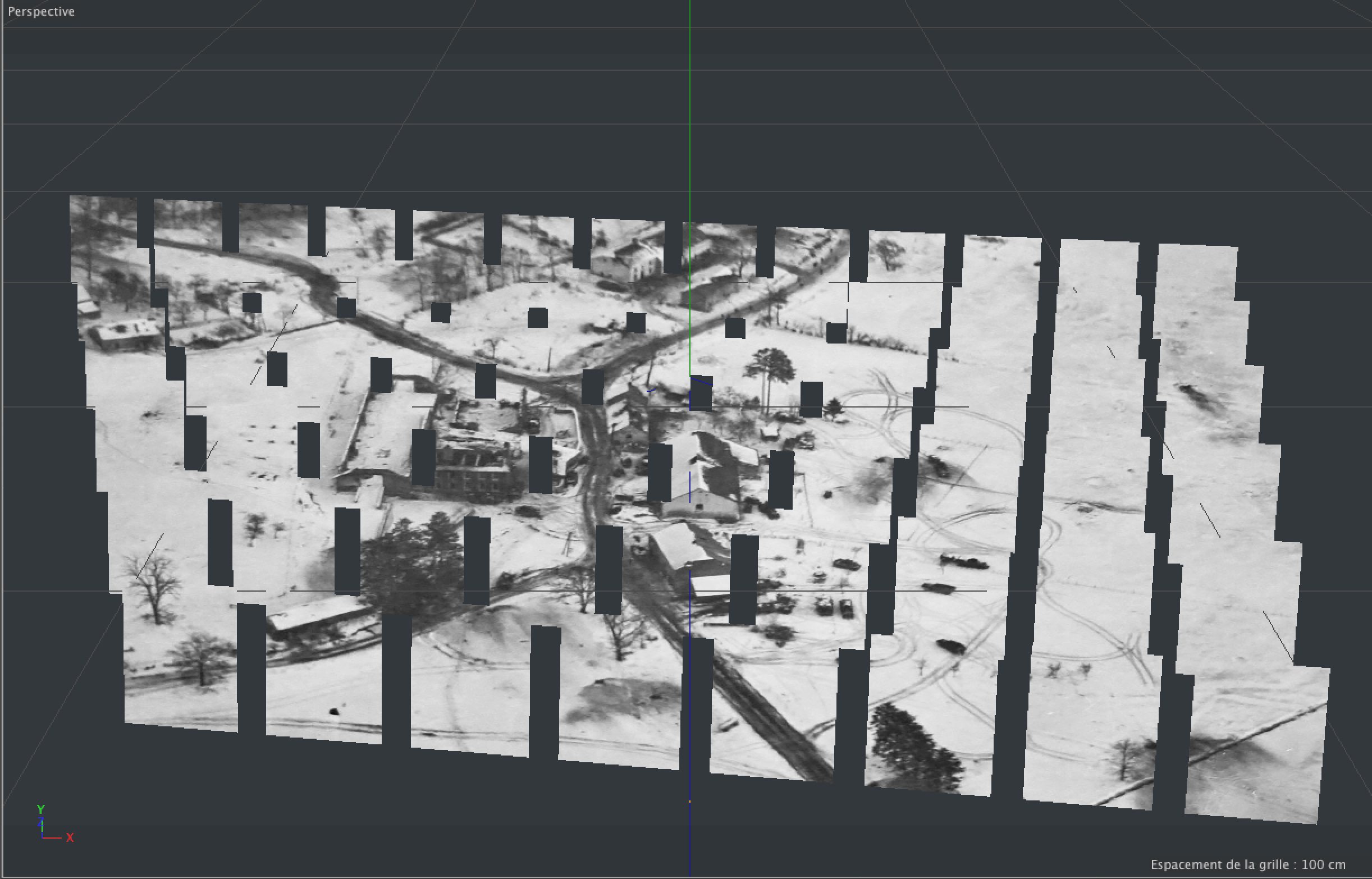
Bizory (1945) reinterprets a wartime aerial photograph as a fragmented installation composed of framed prints aligned on the floor. The image can only be reconstructed through the viewer’s movement, as shifting distance and perspective gradually reassemble the landscape. This transformation turns a strategic military image into a physical, perceptual experience, where history is no longer observed from above but rebuilt step by step through proximity and attention.
Mixed-media, enamel paint on vintage plate, aluminium egg
2026
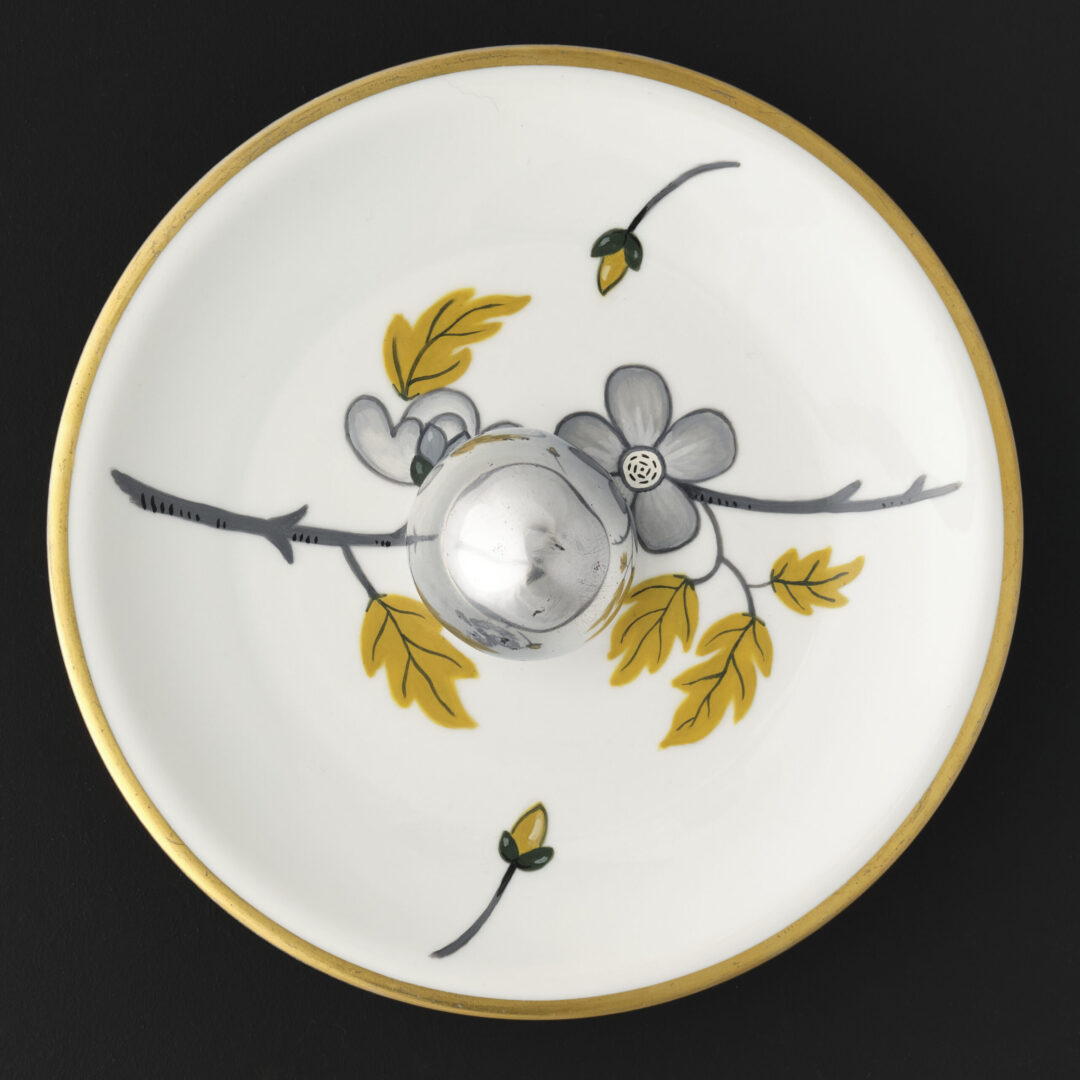
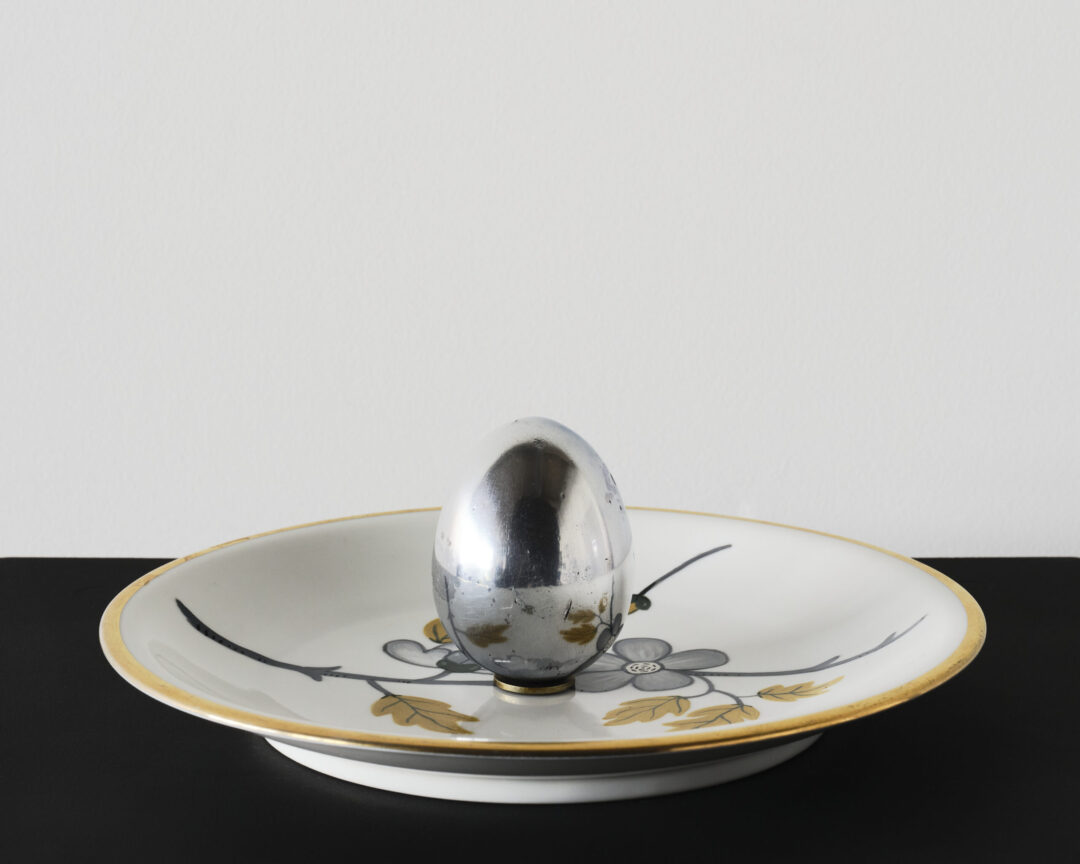
The Party consists of a ceramic plate referencing a decorative object linked to Nazi Germany, partially repainted using the camouflage colours of the V2 rocket. Placed on a plinth and accompanied by an aluminium egg, the work juxtaposes domestic decoration, militarised aesthetics, and Maurice Bourdon’s imaginative recipe writing, where culinary fantasy functioned as resistance under conditions of deprivation.
Aluminium, canvas, wire
2026
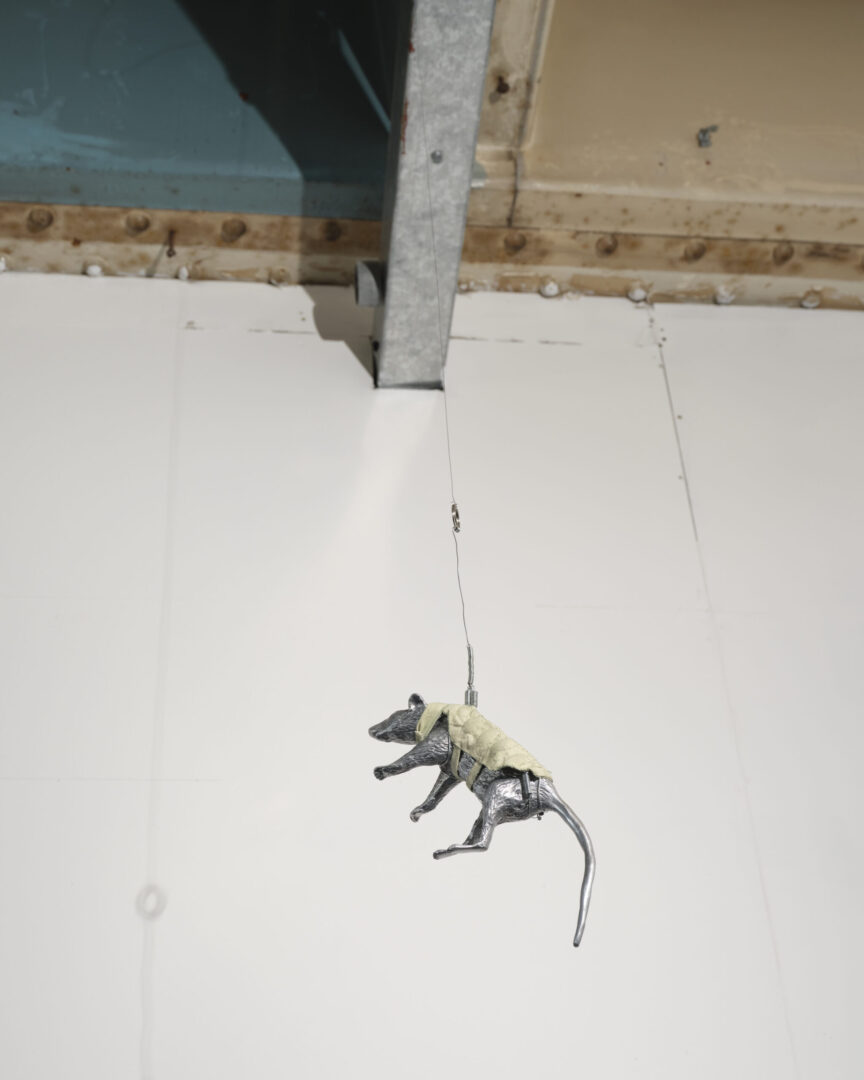
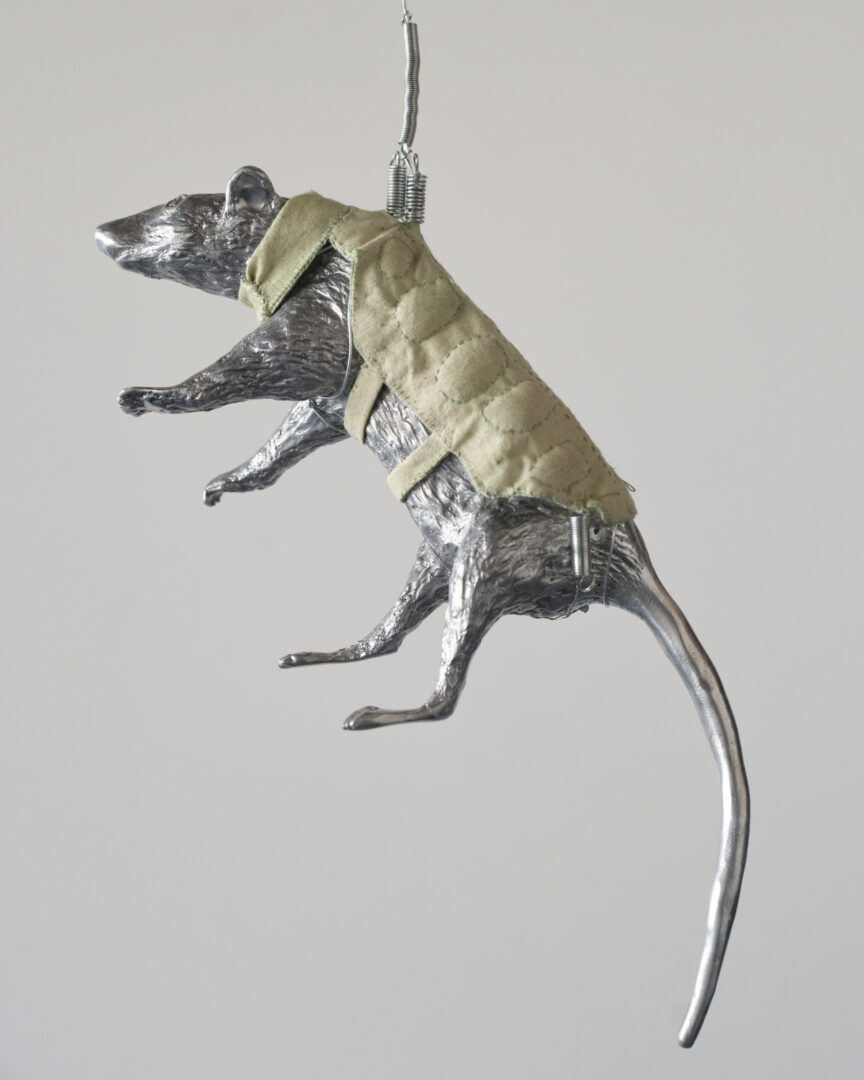
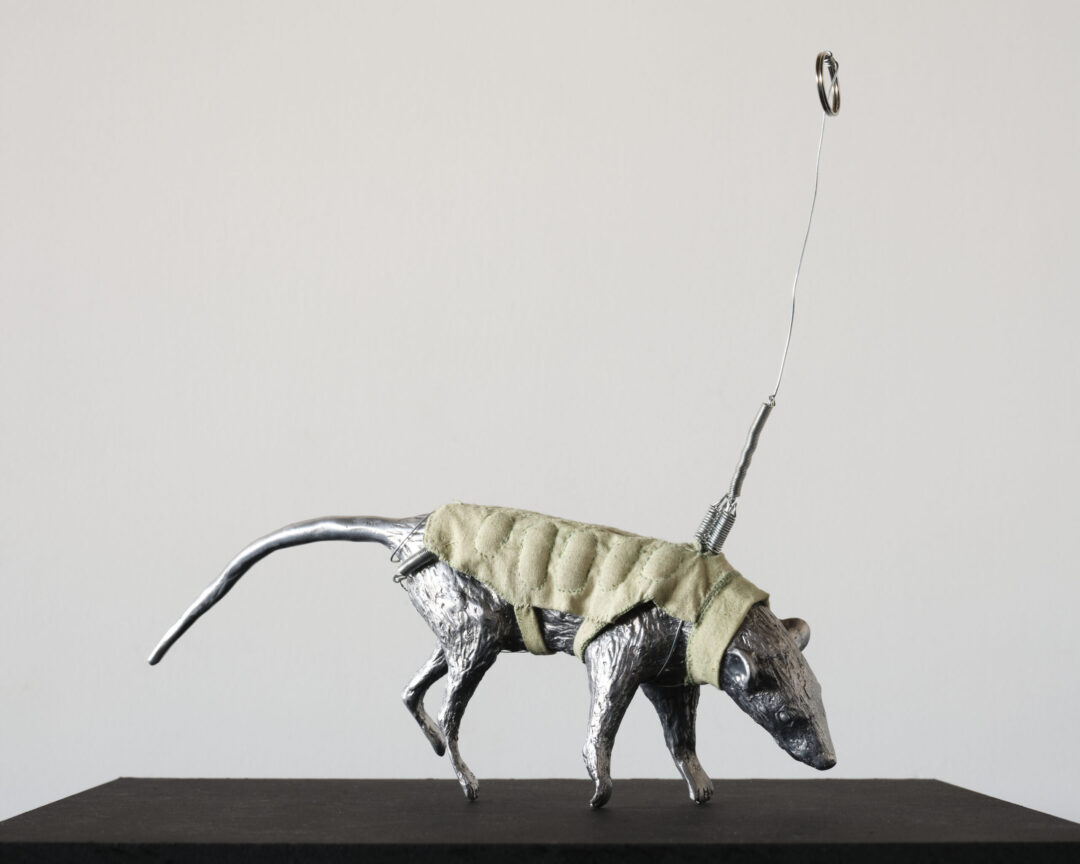
In Hector (In memorium 1961), a life-sized aluminium rat wearing an anti-gravity suit is suspended in space. Based on an archival photograph, the sculpture memorialises Hector, a laboratory animal used in the French space programme and later dissected. Ritchie draws a parallel between Hector’s fate and that of forced labourers at La Coupole, both of whom were treated as expendable bodies without agency and who were instrumentalised in the name of progress.
Series of 4 drawings, pencil and engraving on Hahnemühle Watercolour paper
2026
Underground
Landscape of war
Lunar
Ooid
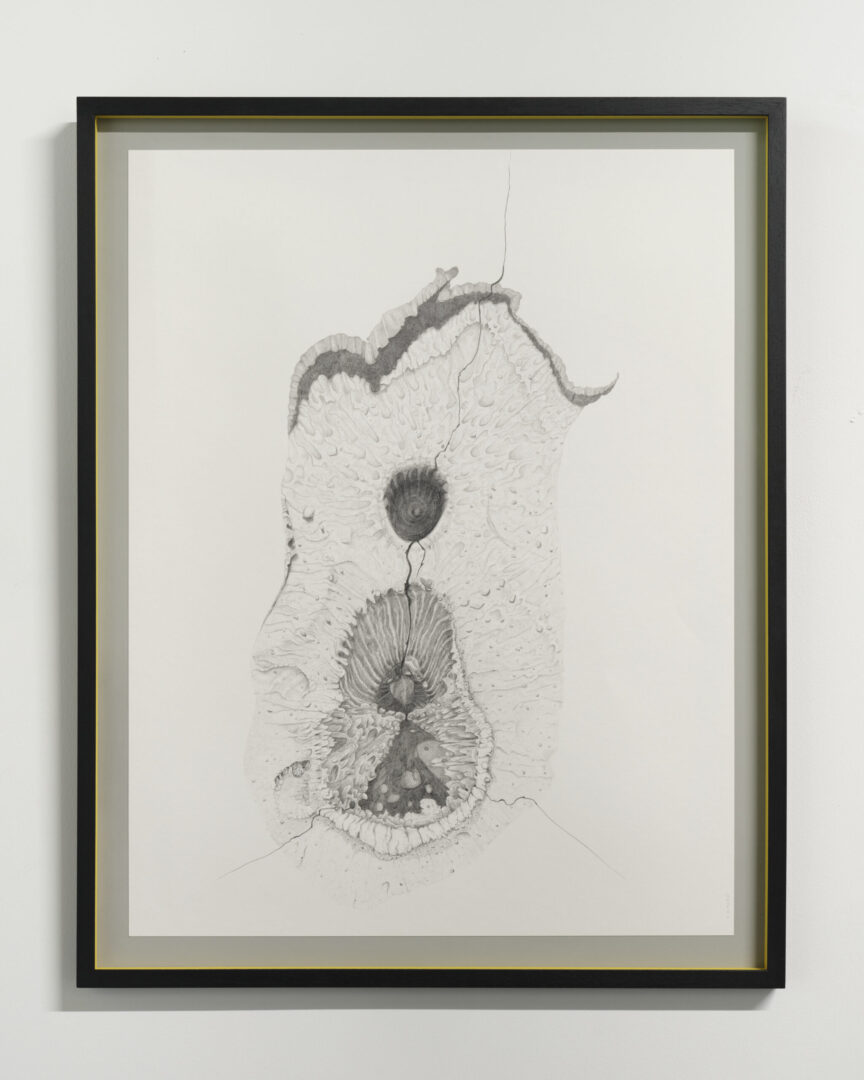
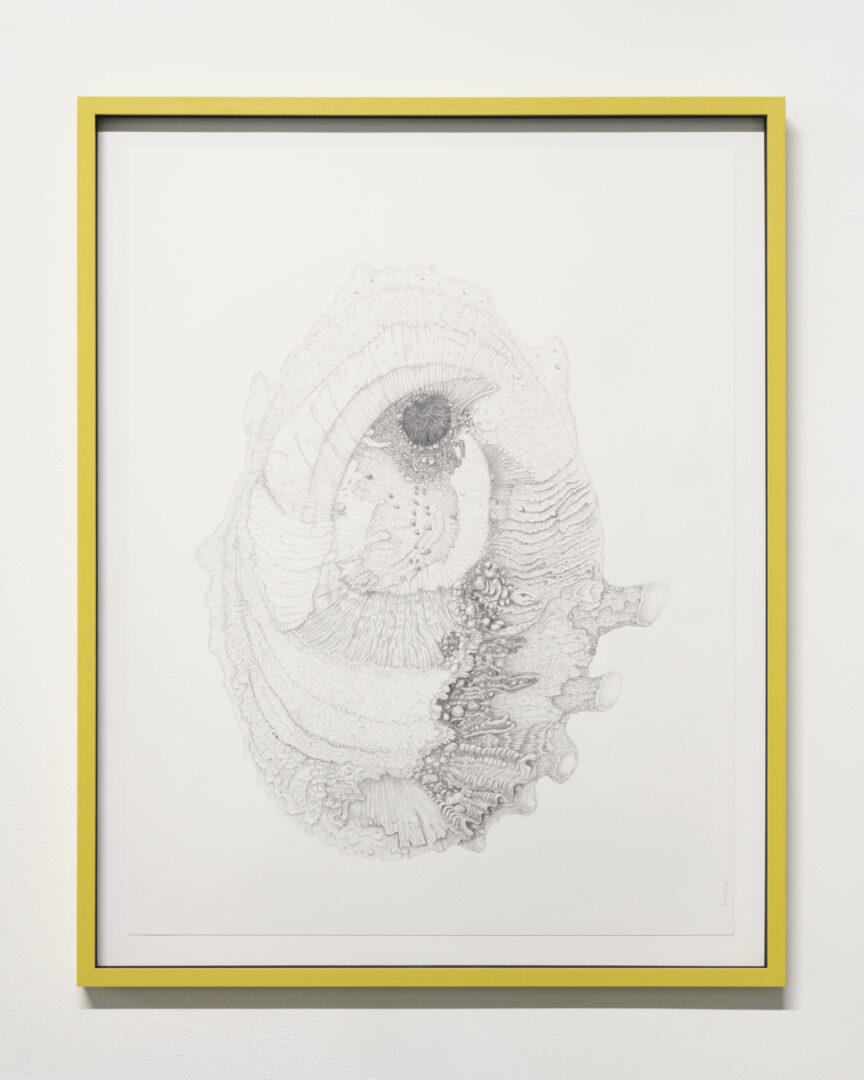
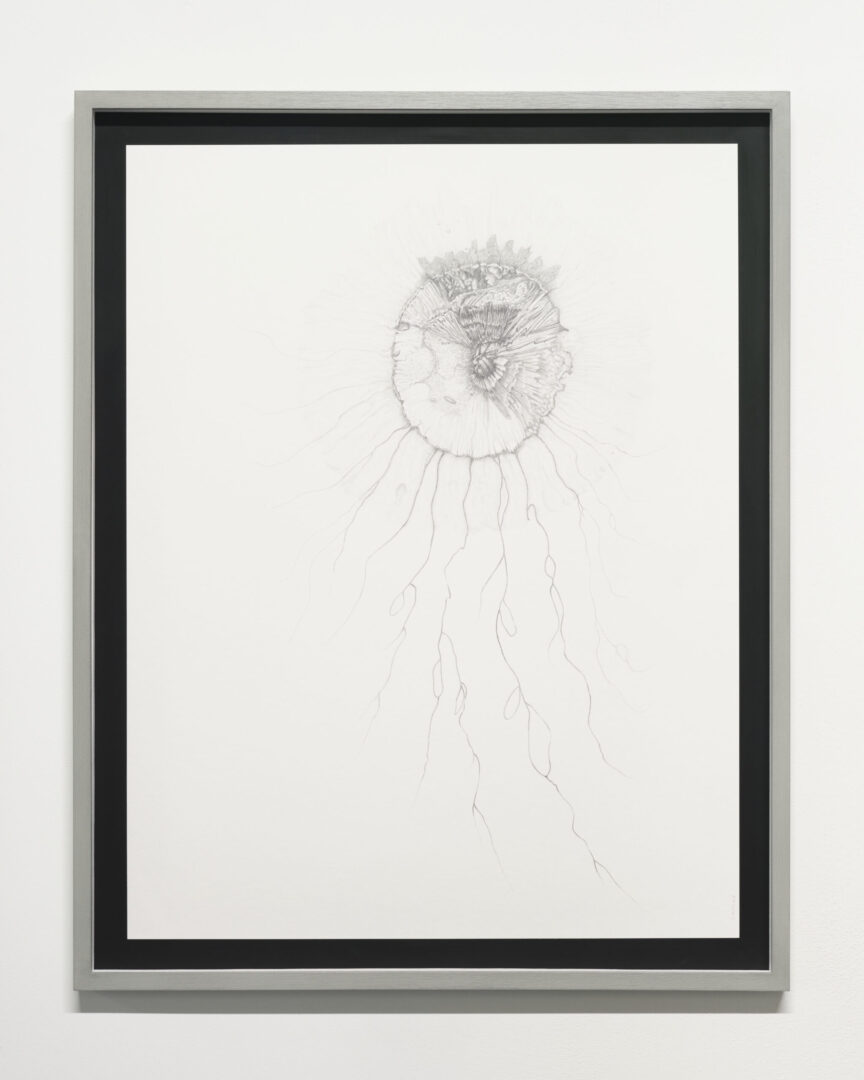
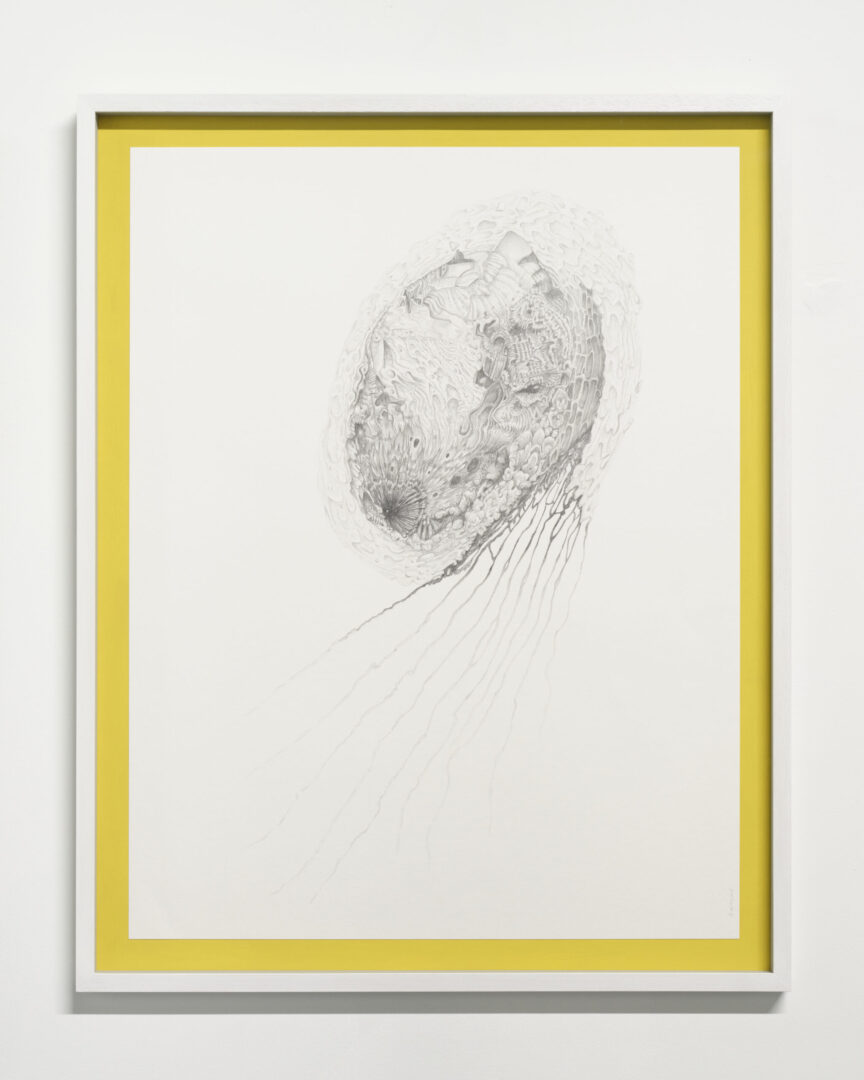
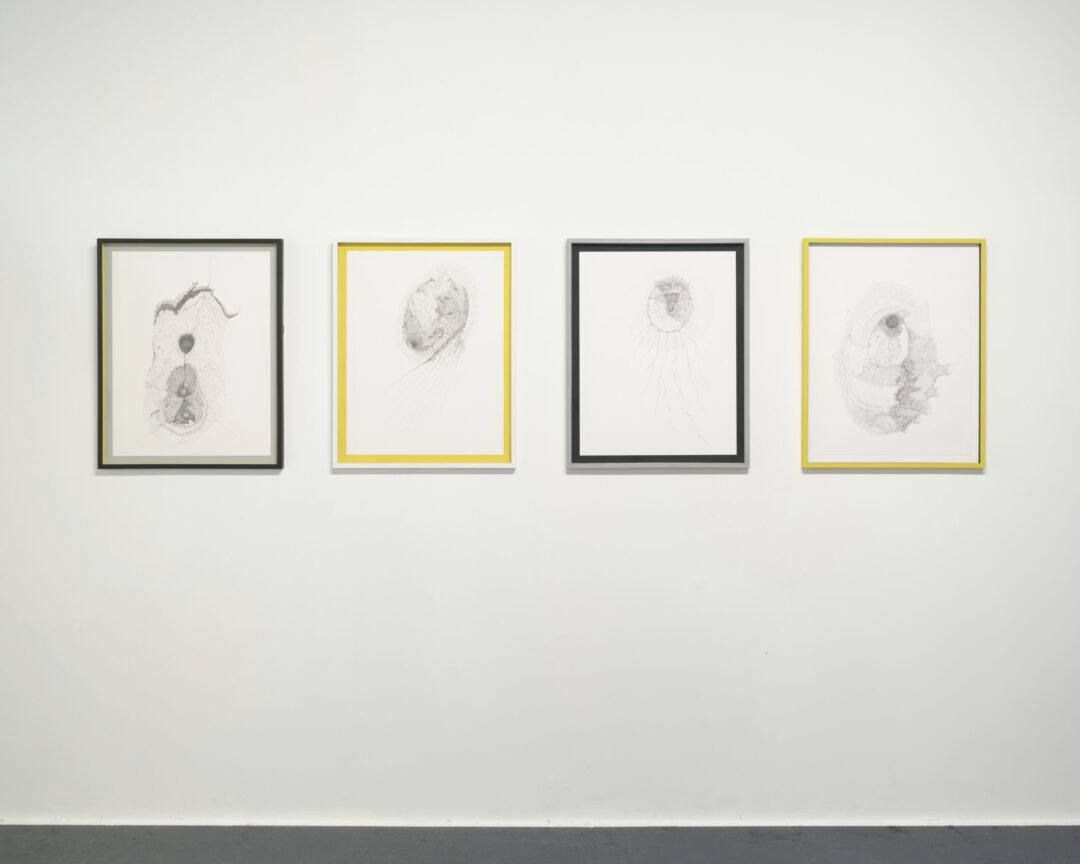
The drawing series Crater / Creatura explores different forms of voids and wounds: the tunnels beneath La Coupole, the bombed wartime landscape, the cratered surface of the moon, and an egg-shaped imprint formed by dropping an egg into concrete powder. Together, the drawings connect geological, architectural, and bodily forms of rupture, linking terrestrial and celestial landscapes to histories of violence and aspiration.
Taxidermy-crow, aluminium and silver wire nest, concrete egg, shelf
2026
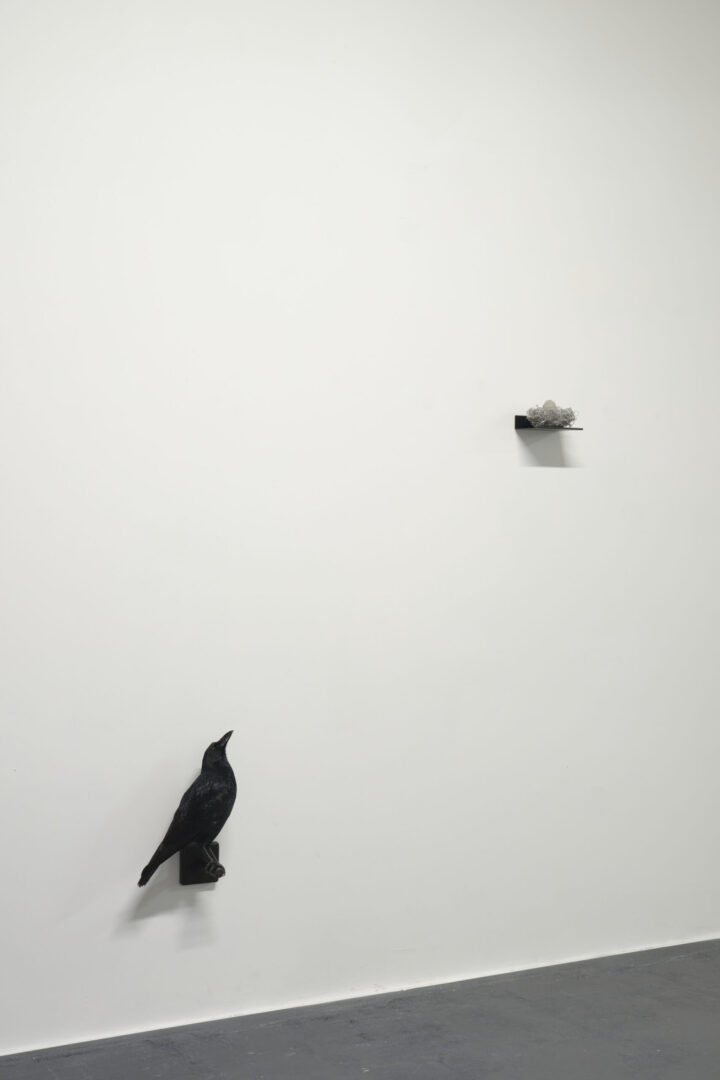
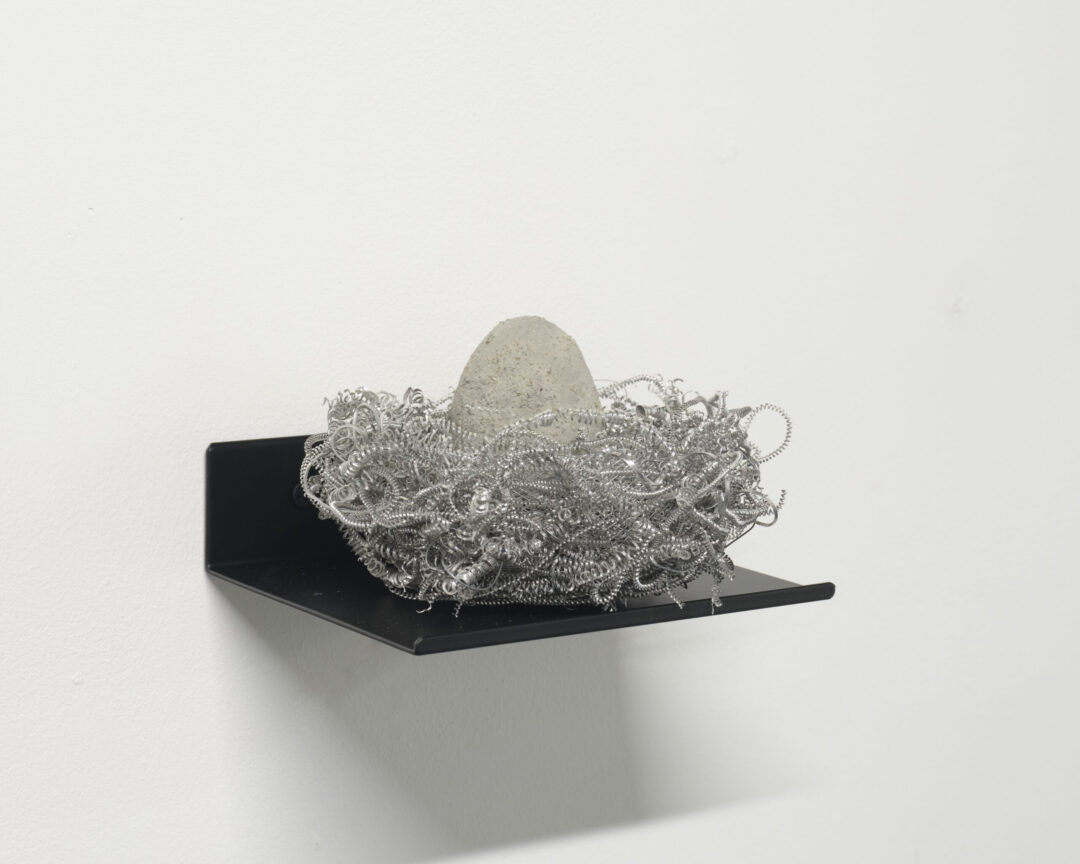
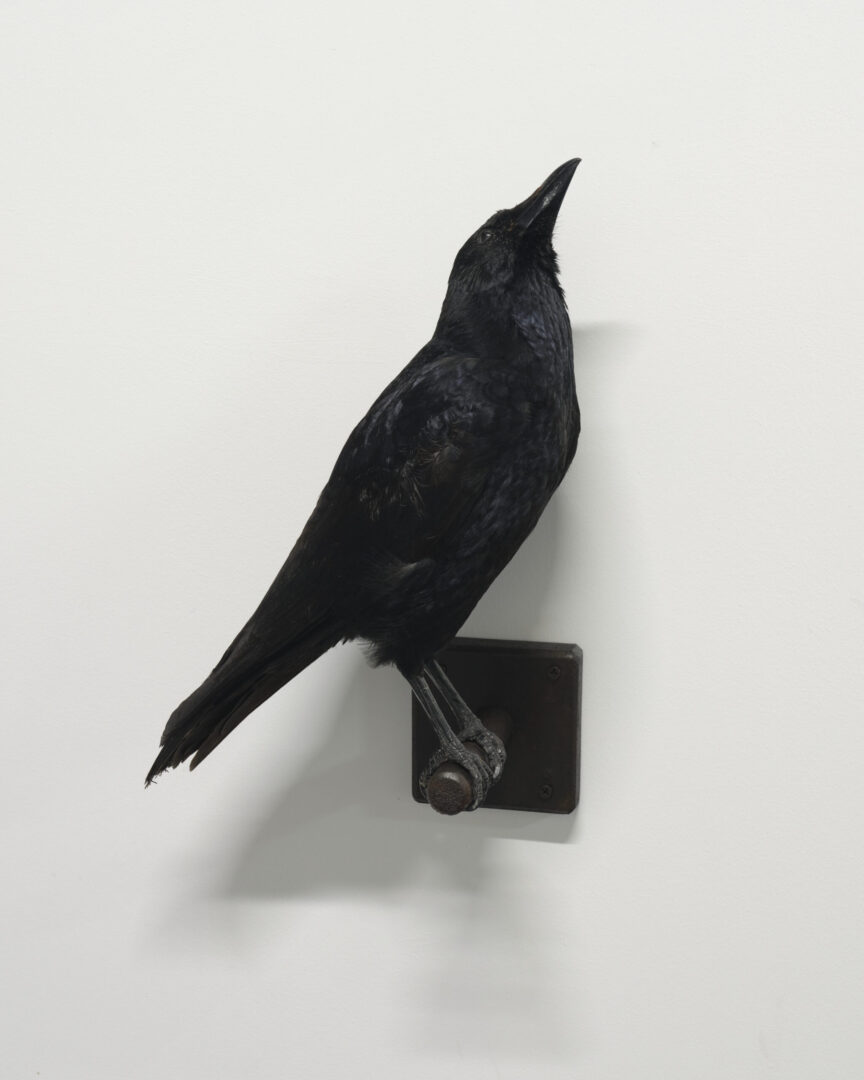
The mixed-media assemblage Macha references both resistance iconography and the contemporary wildlife reclaiming the site at La Coupole. The use of materials contrast fragility with strength and brings these attributes into the realm of endurance through re-use and survival. In Irish mythology Macha is a tri-partate goddess who often appears in the form of a crow. She is a shape-shifter associated with war and transformation, with death as well as birth.
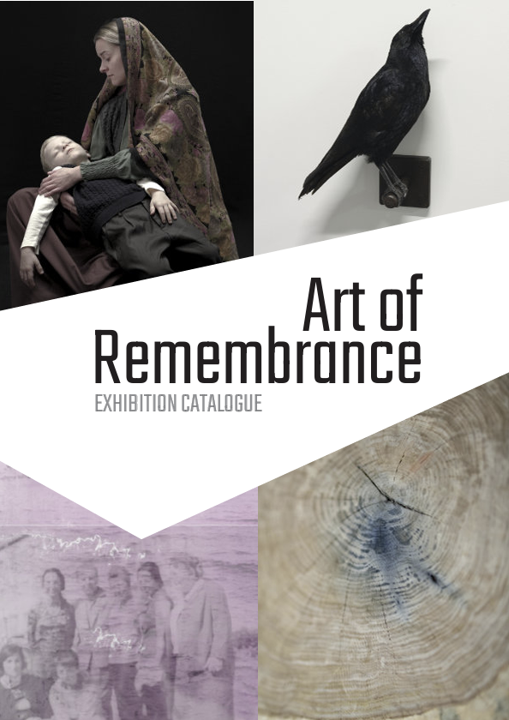
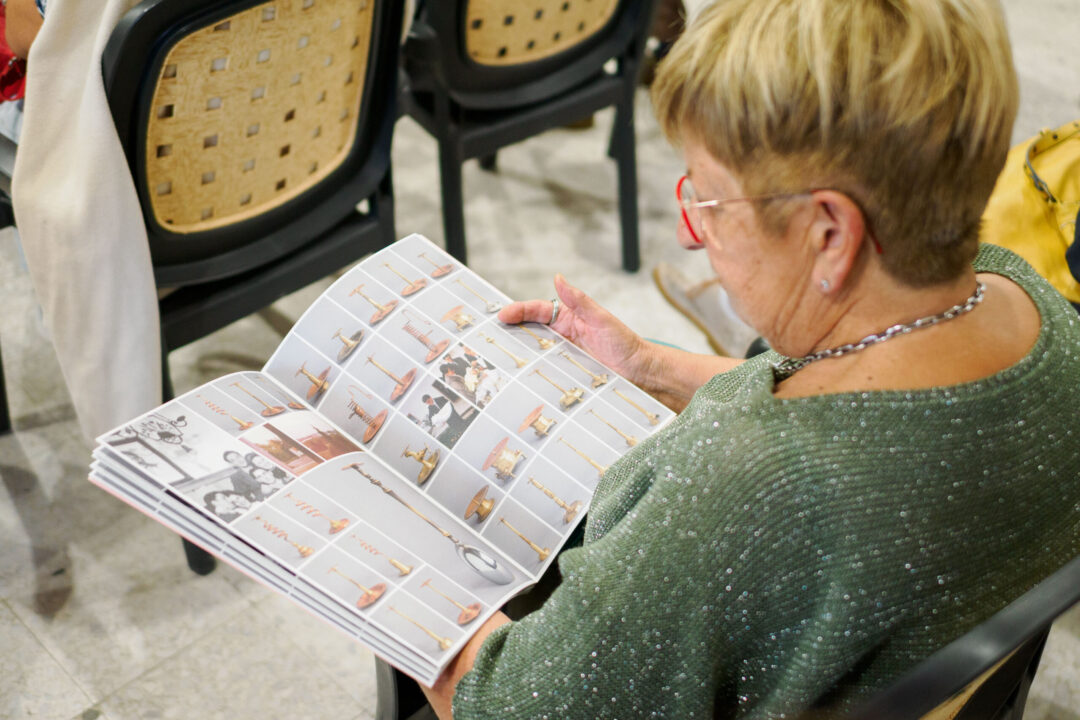
The catalogue offers further insight into the artists, their residencies, and the artworks presented in Art of Remembrance.
© 2025 | Art of Remembrance. All rights reserved.